
One engine,
every channel.
Fonix.AI is the platform our models run in production. Voice agents that answer and place calls, chat across WhatsApp and web, campaigns that follow up — all on speech and language models we trained ourselves, in 14+ Indian languages, deployed in your cloud or inside your building.
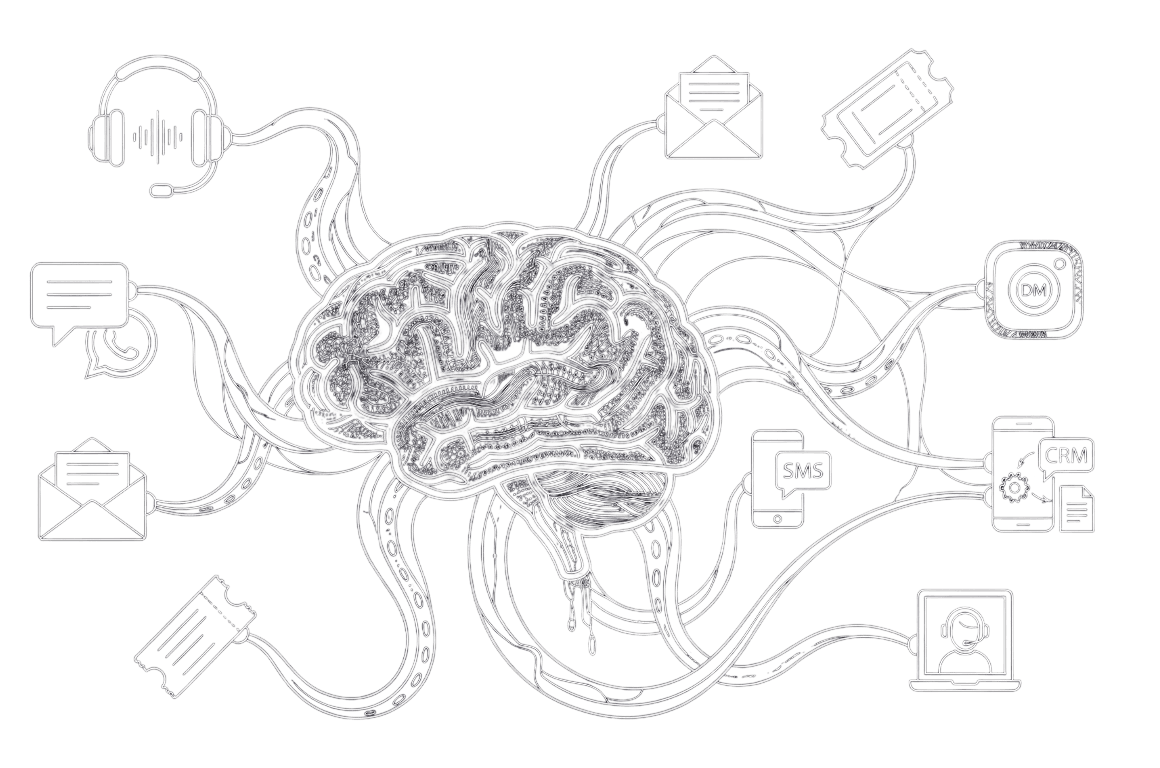
What the platform does.
Four surfaces, one agent definition behind them.
Voice
Inbound and outbound agents that hold a real conversation — interruptions, hesitation, code-switching mid-sentence — rather than walking a caller through a menu.
Chat
The same agent on WhatsApp, web and in-app. One definition, one memory, so a customer who starts on chat and calls later is not starting again.
Campaigns
Scheduled and triggered outreach — reminders, follow-ups, collections — with the conversation, not just the delivery, handled end to end.
Analytics
What was said, what was resolved, where conversations fail. Transcripts are searchable, so the failure cases are findable rather than anecdotal.
Why it is built this way.
The parts of the architecture that are hard to copy, and the reasons they exist.
The models are ours
Most voice products chain together someone else's speech recognition, someone else's language model and someone else's synthesis. When one of those vendors changes a price or deprecates an endpoint, the product changes underneath you. Ours are trained in-house, so the roadmap is ours to set.
Indian languages are the design case
Not a translation layer over an English model. Trained natively across 14+ languages including the code-switched speech most Indian conversations actually run in — the sentence that starts in Marathi and ends in English is the normal case, not an error.
The Emotion Engine spans every stage
Affect and intent are carried from what a caller says through to how the system replies, rather than detected at one end and discarded. That is only possible because the same team trains all three stages.
On-premise is a real option
A pure-SaaS competitor cannot offer this. The same platform runs inside your infrastructure when data residency demands it, which is what makes it viable for NBFC, insurance and hospital deployments.
How it deploys.
| Cloud | Managed by us. The fastest route to production, and where most deployments start. |
|---|---|
| On-premise | The same platform on hardware you control, including air-gapped. No outbound calls. |
| Your own model | Bring a third-party LLM behind the same pipeline where a policy or a preference requires it. |
| Languages | 14+ Indian languages with code-switch handling, plus international locales. |
| ABDM / ABHA | Fonix.AI carries the ABDM integration and ABHA identity handling for healthcare deployments. |
| Compliance posture | DPDP, RBI localisation, HIPAA and NABH environments — determined by where you deploy, not by a setting. |
The architecture behind all of this is on the technology page, and what on-premise deployment involves is set out under on-premise LLM.
Questions we get asked.
How is this different from the voice AI tools already on the market?
Most are an orchestration layer over third-party speech and language APIs. That works, and it is faster to build, but the vendor owns the part that matters — quality, latency, price and whether the endpoint exists next year. We train the models, so those are our decisions rather than someone else's.
Does it actually handle Hindi and regional languages, or just claim to?
It is the case the models were built for, including code-switching mid-sentence, which is where translated systems break. The honest answer is that coverage is not uniform — languages with more available speech data perform better. Test it on your own traffic rather than trusting a list.
Can we run it without sending data to your cloud?
Yes. The same platform deploys inside your infrastructure, including air-gapped where a tender requires it. That is the deployment mode regulated customers usually choose, and it is why data residency is an architectural property rather than a contractual promise.
What does it cost?
Pricing lives on fonix.ai, where you can also start a trial. On-premise deployments are scoped individually because the sizing depends on your call volume and the hardware you already own.
How does this relate to AE Guardian?
Fonix.AI is the platform for customer engagement — voice, chat and campaigns. AE Guardian is a device for clinical documentation inside consultation rooms. They share the same models and the same Emotion Engine, and Guardian's documentation flows through Fonix.AI where a hospital runs both.
Start with the work.
Explore a practical workflow: the conversation, the system behind it, and what happens when a person needs to take over.
Workflows
Clinic receptionist
A confirmed appointment, or an owned callback.
Explore the workflowReal estate calling
A relevant site visit, with the buyer context attached.
Explore the workflowAdmissions follow-up
A counselling conversation with the right context.
Explore the workflowCOD confirmation
An order decision your dispatch team can trust.
Explore the workflowAppointment reminders
Attendance confirmed, or a reschedule with an owner.
Explore the workflowCustomer support voice bot
A verified answer, or a ticket someone owns.
Explore the workflowLead qualification
A buyer brief and an accepted next step.
Explore the workflowCart recovery
An answered checkout question and a verified order.
Explore the workflowFailed delivery recovery
A courier-confirmed next step for the right shipment.
Explore the workflowEMI reminders
A current reminder and a recorded next step.
Explore the workflowInsurance renewals
A renewal request with current facts and clear ownership.
Explore the workflowMissed-call follow-up
One callback, owned and resolved.
Explore the workflowCustomer feedback
A faithful response and an owned follow-up.
Explore the workflowDealership service booking
A service booking the workshop can fulfil.
Explore the workflowInterview coordination
A confirmed interview with aligned records.
Explore the workflowPlatform evaluation
AI calling software
A verified next step your team can act on.
Explore the workflowMultilingual voice bot
The correct task, in the language the caller uses.
Explore the workflowOn-premise voice AI
A deployment your operations team can verify.
Explore the workflowConversational AI and IVR
The right route, with a way through every failure.
Explore the workflowVoice AI cost evaluation
A comparable cost estimate with visible assumptions.
Explore the workflowStart on the platform.
Trials, pricing and signup live on fonix.ai. If you are evaluating an on-premise deployment or want to talk through a regulated environment, come to us instead.