
AE Guardian.
A desktop device that listens to the consultation, with the patient's consent, and writes the note. Clinicians leave the room with documentation already drafted, and the hospital gets a NABH-ready record as a by-product. Nothing is sent anywhere: it runs entirely inside your building.
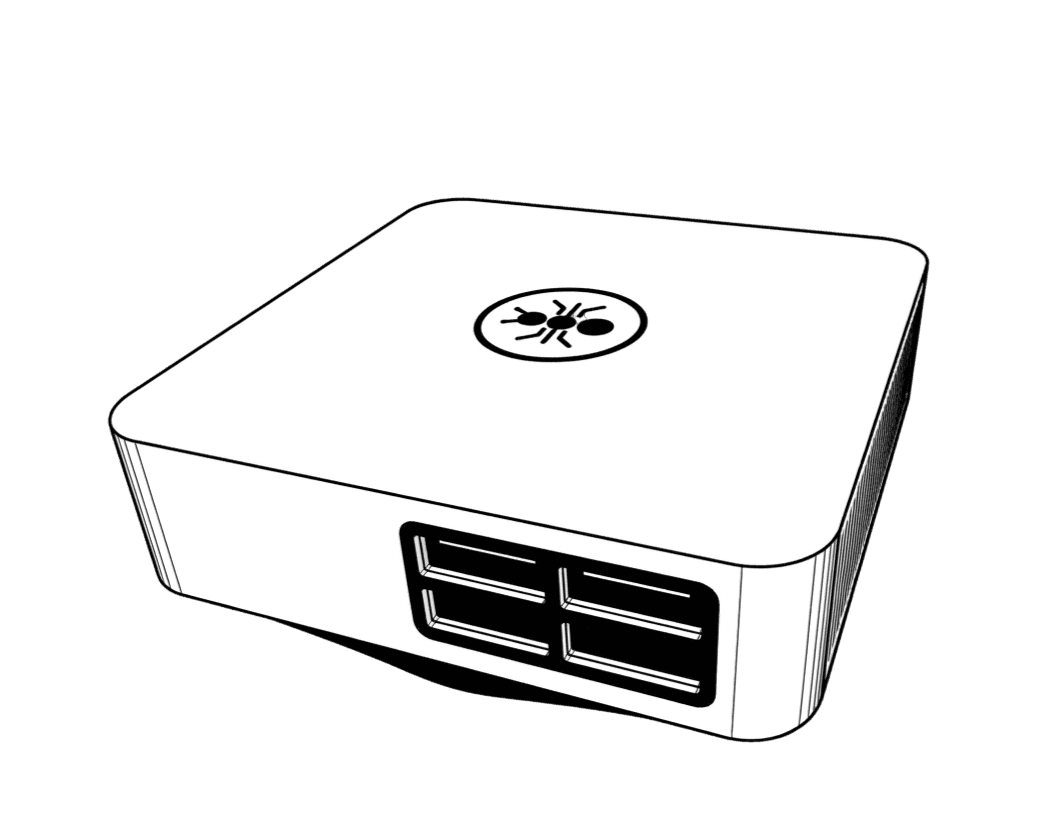
What AE Guardian does.
Built to give clinicians their attention back during the consultation, and to leave the hospital with a record it can stand behind.
Clinical scribing.
Drafts structured consultation notes as the visit happens, so most of the write-up is done before the patient leaves. Clinicians review and sign off — nothing enters the record unapproved.
Consent before capture.
Recording starts only after consent is captured for that consultation, and either party can stop it at any point. Declining is logged and changes nothing else about the visit.
NABH documentation.
Produces the communication records NABH assessors ask for, as a by-product of the notes rather than as a separate administrative exercise.
How NABH documentation worksA defensible record.
Consultations are timestamped and transcribed, so what was actually discussed can be established later. In practice this protects clinicians at least as often as it examines them.
Communication feedback.
Optional, private feedback to the individual clinician on clarity and completeness. Off by default, and never surfaced to management as a ranking.
Indian languages.
Consultations that switch between English and a regional language mid-sentence are the normal case, not an error condition.
Language coveragePatient data never leaves your building.
Consent-gated
No consultation is captured without consent recorded for it, and withdrawal takes effect immediately.
On-premise
The device runs inside your hospital. Audio and notes never leave your network.
HIPAA architecture
No outbound calls to external servers. No PHI egress by design.
You set retention
Audio can be discarded once the note is signed. Retention windows and access are yours to configure and audit.
Why a device, not an app.
Almost every ambient scribe is software running on a phone or laptop. That choice is what decides whether it works in an Indian OPD.
The room is the hard part
Indian OPD rooms have a queue outside the door, family members inside, and a consultation measured in minutes. Most of the difficulty in clinical documentation is capturing usable speech at all, and that is decided by the microphone before any model sees it.
A phone on the desk is the wrong instrument
App-based scribes rely on whatever handset the clinician happens to own, pointed wherever it happens to be. Guardian is purpose-built for capture from a fixed position across a consultation desk, which is a narrower problem and therefore a solvable one.
Inference happens where the audio is
Because the device carries its own compute, the consultation never leaves the room to be understood. That is what makes 'no data egress' an architectural fact rather than a policy promise.
What a deployment involves.
The questions an IT and quality team ask before a pilot, answered before you have to ask them.
| What arrives | A desktop unit per consultation room. Hardware and software together — there is no separate server to procure. |
|---|---|
| Network | Local network for management only. No outbound connectivity is required, and the device functions with the internet disconnected. |
| Data path | Audio is processed on the device. Notes are written to your systems inside your network. Nothing is transmitted externally. |
| Consent | Captured per consultation before recording begins. Withdrawal takes effect immediately and both states are logged. |
| Retention | Configured by you. Audio can be discarded once the note is signed, with access rights auditable. |
| Clinician workflow | The consultation runs normally. The draft note is reviewed and signed before anything enters the record. |
| ABDM / ABHA | Handled by Fonix.AI, which carries the ABDM integration and ABHA identity. Guardian's documentation flows through it rather than reimplementing it. |
Documentation produced this way also covers the clinical communication records an assessment asks for — see NABH documentation. For consultations that run in Hindi or a regional language, see language coverage.
Before you pilot it.
Is this a cloud service?
No. AE Guardian is a physical device that runs inside your hospital and makes no outbound calls. That is the difference between it and every app-based scribe: the audio is never transmitted anywhere, because the compute is in the room.
What happens if the internet goes down?
Nothing changes. The device does not depend on external connectivity to capture a consultation or draft a note, which is also why it can be deployed air-gapped where a tender requires it.
Who can listen to the recordings?
Whoever you authorise, under access rules you configure and can audit. Many hospitals choose to discard audio once the note is signed and keep only the record. That is a setting, not a special request.
What if a patient refuses to be recorded?
Then nothing is captured for that consultation, and the visit proceeds exactly as it otherwise would. Declining is logged so the refusal itself is documented, and it changes nothing else about the care given.
Does it integrate with our existing systems?
Guardian produces the documentation; your existing systems remain the record. Where a hospital runs Fonix.AI, the ABDM integration and ABHA identity handling sit there and Guardian's output flows through it. Beyond that, integration is scoped per deployment against what you already run — we would rather establish that in a scoping conversation than claim a generic answer here.
How do we evaluate it properly?
In your own rooms, on your own consultations, in the languages your patients actually speak. Any accuracy figure quoted from someone else's clinic tells you very little about yours. We would rather run a limited pilot than argue from a benchmark.
Deploying Guardian in a clinical setting?
Guardian goes into live consultations, so deployments start with a conversation about consent, workflow and retention rather than with a sales call.