

A practical guide / Fonix.AI
Freight pickup coordination: a practical implementation guide
A worked scenario, illustrated decision review and a practical pilot worksheet.
A logistics voice bot should establish pickup readiness
A logistics voice bot is useful when it resolves whether a shipment can actually move: cargo ready, documents available, vehicle suitable, dock accessible and a responsible person expecting the driver. A pleasant call to the warehouse does not establish any of those conditions by itself.
Scope a Fonix.AI pilot around freight pickup coordination rather than general parcel tracking. Consumer failed-delivery work belongs in the NDR guide. Here, the unit of work is a shipment or consignment with a carrier, site and planned collection window.
Give the call a shipment reference and a responsible site
Load the shipment reference, collection address, dock contact, cargo units, readiness time and vehicle requirements from the transport or warehouse system. Keep weight, volume and package count distinct. “Twelve pallets” cannot silently become twelve individual cartons.
Check which party controls the next decision. The shipper can confirm packing readiness; the carrier assigns a vehicle; the receiving dock owns unloading access. Record each response against that party. Shared telephone numbers and subcontracted transport make number-only identity particularly unreliable.
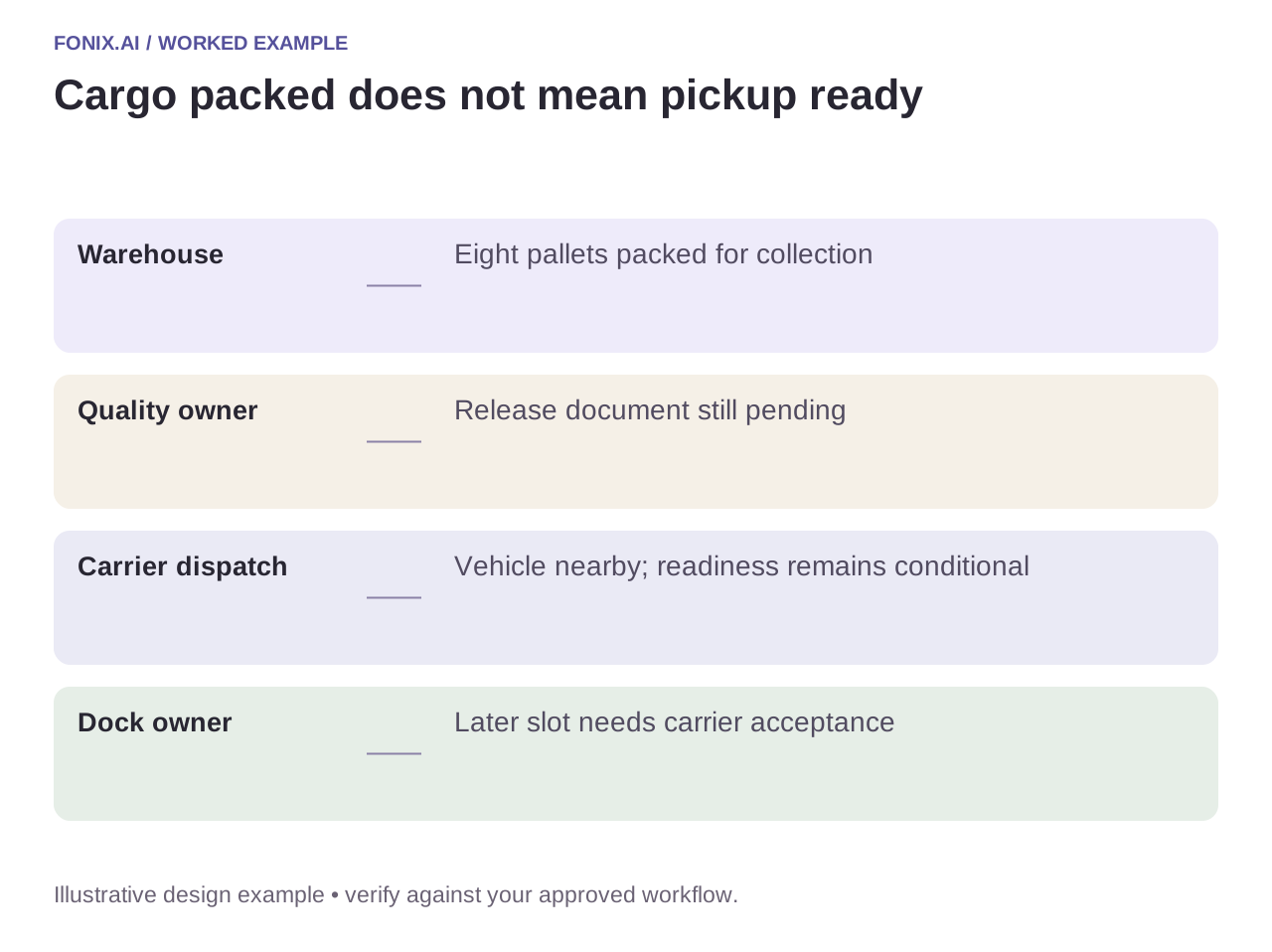
Worked example: the goods are ready but the dock is not
In a fictional pickup, eight pallets are packed for a 3 pm collection. The warehouse reports that loading starts only after a quality-release document arrives. The carrier's vehicle is already nearby. A correct summary is “cargo packed; quality release pending; loading not confirmed”, rather than “pickup confirmed”.
Route the release question to its owner and give dispatch the dependency. If the carrier proposes a smaller vehicle, check the approved capacity and handling constraints before changing the assignment. A verbal “should fit” is not a substitute for dispatch approval. When the dock offers a later slot, confirm whether the driver and route plan can accept it.
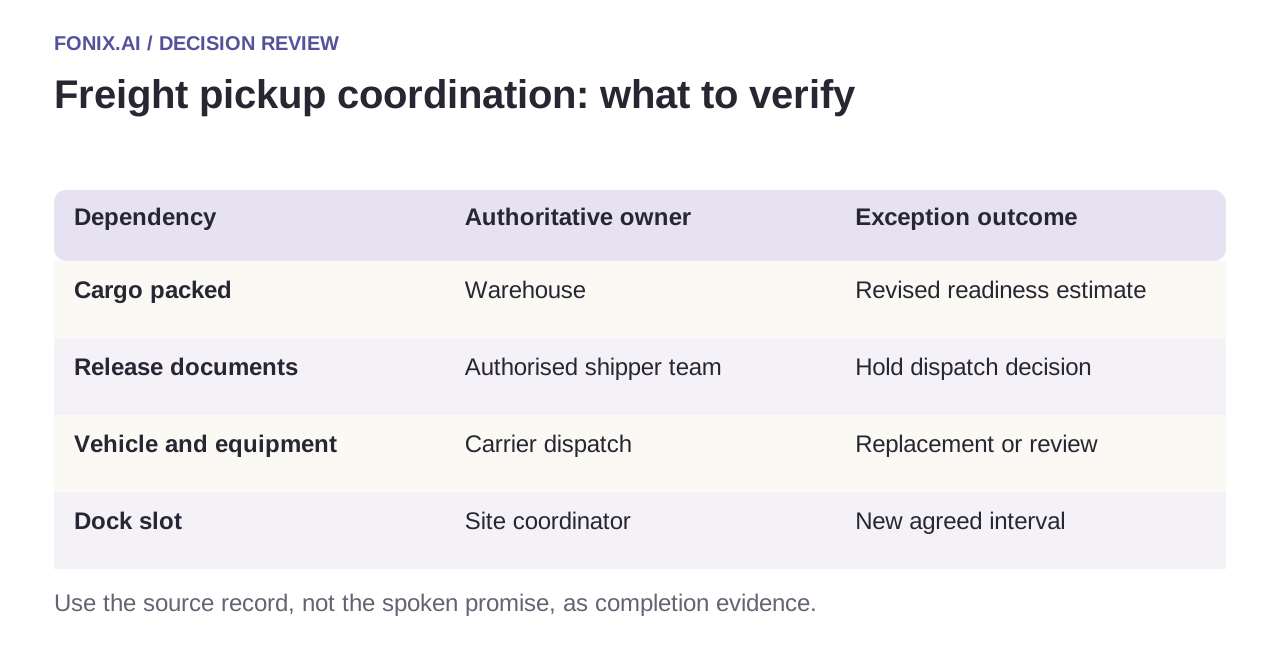
| Dependency | Authoritative owner | Exception outcome |
|---|---|---|
| Cargo packed | Warehouse | Revised readiness estimate |
| Release documents | Authorised shipper team | Hold dispatch decision |
| Vehicle and equipment | Carrier dispatch | Replacement or review |
| Dock slot | Site coordinator | New agreed interval |
Preserve changes across dispatch, warehouse and carrier
Attach each call to the current shipment revision. A cancelled load or changed warehouse must suppress older coordination tasks. When two contacts provide conflicting readiness times, retain both statements and request resolution from the designated shipment owner.
Write a structured handoff containing the unresolved dependency, last confirmed time, receiving team and requested action. Avoid broadcasting a transcript to everyone in the route. Each party needs the operational facts relevant to their role. Escalate damaged goods, hazardous-cargo questions or safety incidents through the site's approved process; the voice agent should not improvise handling instructions.
Dispatch readiness before the driver is committed
Use a sanitised consignment record, dock schedule and dispatch responsibility map. Agree which site contact confirms cargo readiness and which carrier contact can accept a revised window. Keep hazardous-goods decisions with authorised operations staff.
| Pilot case | Required behaviour |
|---|---|
| Packing is complete but quality release is pending | Keep loading unconfirmed and route the document dependency to its named owner. |
| The carrier proposes a smaller vehicle | Request capacity and handling approval instead of accepting an informal fit estimate. |
| A shipment changes warehouse after calls are queued | Suppress the old task and rebuild the contact and location context from the current revision. |
Count attempted pickups lacking a required readiness condition over the same eligible shipment cohort. Also record accepted slot changes and coordinator rework. Use a baseline of comparable lanes and sites before attributing fewer failed trips to automation.
Is a warehouse yes enough to confirm collection?
Not when collection also depends on release documents, vehicle assignment or a dock slot. Record the warehouse's answer against its responsibility and obtain the other required acknowledgements. The final message should name what is ready and what is still pending.
Measure avoided empty trips with a defined cohort
Test an obsolete shipment event, a disputed pallet count, a vehicle substitution and a late document release. Compare the final transport record with warehouse and carrier responses. Measure pickups attempted without all required readiness conditions, accepted revised slots and manual coordination time for the same shipment cohort. Keep failed contacts visible.
Bring a shipment schema, dispatch ownership map and four realistic exceptions to review freight coordination by voice. Use outage notifications when the task is informing a known affected group rather than negotiating a pickup.