

A practical guide / Fonix.AI
Automated EMI reminder calls: build the workflow around current payment state
Workflows, exceptions and the questions to ask before deployment.
Remind from the ledger, not yesterday's list
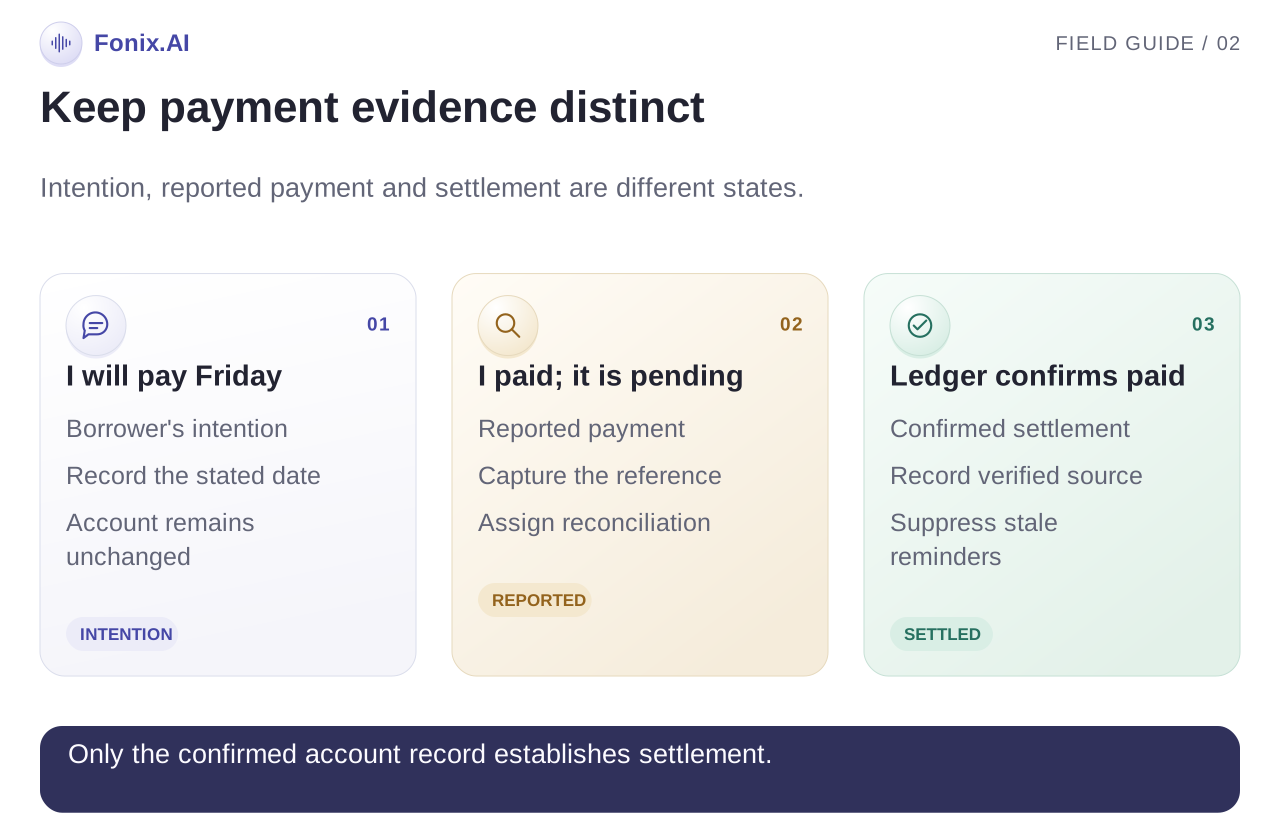
Automated EMI reminder calls help a lender explain an upcoming due date and capture a borrower's requested next step. The useful outcome is an accurate reminder or an owned follow-up, based on current account information. A statement such as “I will pay on Friday” is an intention, not evidence of a settled payment.
Fonix.AI supports multilingual business voice conversations and cloud or on-premise deployment. Evaluate the reminder with your loan-management and payment systems. The account lookup, contact verification, payment-link process and escalation route need to be established for your deployment.
This guide addresses reminder operations. Account decisions, disputed amounts, hardship requests and settlement terms belong to your authorised team and approved policies. Build the call around the facts the agent may explain and the questions it must route.
Establish eligibility before every attempt
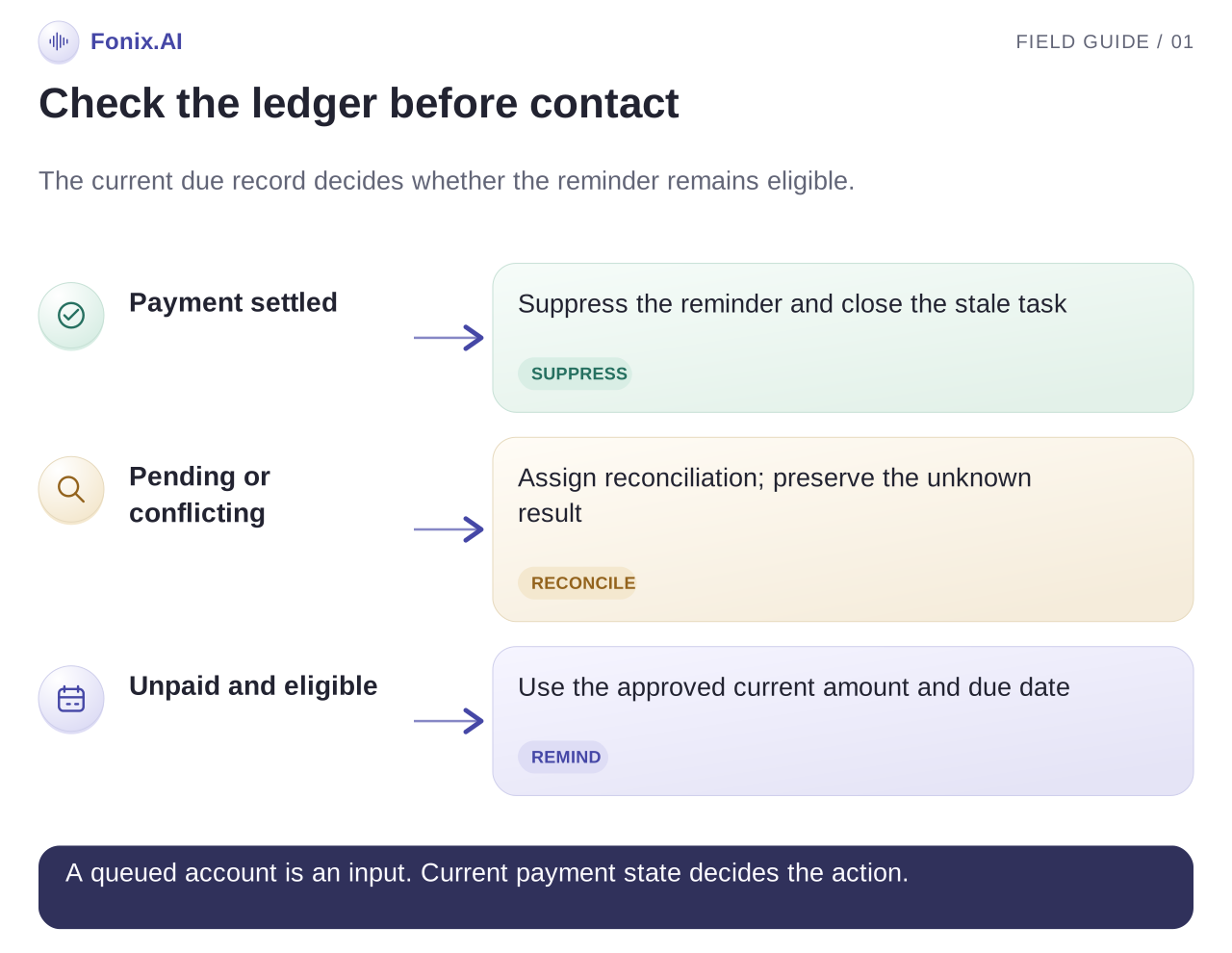
A scheduled list can be out of date before the first call. Payments may settle, balances may change and a borrower may already have spoken to staff. Resolve each account against the current source before an attempt, including retries.
Preserve the account reference, due date, amount, source timestamp, approved contact and existing follow-up owner. Define which payment states suppress reminders and which require reconciliation. A pending payment should not be silently treated as failed or settled.
Use your approved identity process before disclosing private account information. The person answering a registered number may be someone else. When verification fails, give a neutral next step through an approved channel rather than reading out financial details.
Put calling eligibility, permitted contact timing, frequency and preference handling into a policy the workflow enforces. Have the responsible team review that policy against applicable requirements. A product feature does not establish that a campaign is suitable to run.
Read back the amount and date accurately
Use the current approved record for the reminder. Speak the amount, due date and available next steps clearly. Distinguish an EMI amount from an outstanding balance or a charge; combining them without explanation can change what the borrower understands.
| Input | Conversation check | Outcome field |
|---|---|---|
| Due date | Repeat an unambiguous day and month | Source date and accepted readback |
| Amount | Use the applicable currency and amount type | EMI amount, separate from other balances |
| Already paid | Ask only for approved clarification | Reported payment and reconciliation task |
| Intends to pay | Preserve the stated date and uncertainty | Payment intention, not paid status |
| Amount disputed | Capture the question without deciding it | Dispute and responsible queue |
| Requests assistance | Route according to the approved process | Callback or assistance request |
Test mixed-language numbers and corrections. “Eight thousand four hundred, not eighty-four thousand” must change the stored amount interpretation. When the source itself is unclear, stop quoting the amount and assign a review.
Do not improvise penalties, credit consequences or alternative terms. The agent should explain only approved information, preserve the borrower's words and route decisions to their owner.
Reconcile reported payments and stop stale reminders
When a borrower says they have paid, record the report separately from the ledger. Use an authorised payment-status lookup or create a reconciliation task. The agent cannot infer settlement from confidence in the caller's voice.
Before scheduling another attempt, check whether a payment has settled or a staff follow-up is active. A retry should have the same task identity and explicit stop conditions. An old queue item must not start a new sequence after the account no longer requires contact.
Where payment-link delivery is configured, use an approved destination and track its actual send result. Explain the next step without requesting passwords, card security details or payment authentication codes during the call. A sent link remains distinct from a completed transaction.
Retain enough evidence for the team to resolve an unknown result: the source timestamp, lookup reference, delivery result and receiving owner. Follow your retention and access policy rather than collecting additional information because it might be useful later.
A worked reminder and payment correction
This fictional example assumes the account has been verified and the current record shows a due amount, with no settled payment yet.
Assistant: This is the automated reminder assistant for Cedar Finance. The current record shows an instalment of ₹8,400 due on 12 November. Is there a question you would like our team to review?
Borrower: I paid this morning. App mein pending dikh raha hai.
Assistant: I have recorded that you paid this morning and that the app shows pending. I will route a payment-status check. I will not mark this as a settled payment until the account system confirms it.
The operational record preserves a borrower-reported payment, a pending status and a reconciliation owner. It should not create a second payment request while the agreed review is pending unless the responsible policy explicitly calls for that action.
Suggested fields include account reference, verification result, current due record, source time, borrower response, reported payment status, intended date, dispute reference and follow-up owner. These are design suggestions, not a Fonix API schema.
Give exceptions a responsible destination
| Exception | Expected workflow |
|---|---|
| Payment settles while a call is queued | Suppress the attempt after a fresh lookup |
| Another person answers | Use a neutral response without account disclosure |
| Ledger and payment service disagree | Preserve both source references and assign reconciliation |
| Borrower disputes a charge | Route the exact dispute to the authorised queue |
| Lookup times out | Avoid quoting a stale result as current |
| Borrower requests a person | Transfer or create an owned callback with context |
| Borrower needs different terms | Record the request for authorised review |
Demonstrate these cases with the resulting records visible. A calm tone is useful, but the test must also establish whether the account is correct, stale tasks stop and unresolved questions reach a person.
Measure account outcomes and unnecessary contact
Track eligible accounts, attempted contacts, verified conversations, reconciliation tasks, accepted callbacks and settled payments using the same cohort and observation window. Keep the status at call time so later settlement does not erase the original context.
Compare equivalent account groups and contact periods. A settled payment after a reminder may have been an existing automatic debit; do not claim that every subsequent payment was caused by the call. A pilot baseline or holdout can support a more careful comparison.
Also measure repeated contact after settlement, wrong-person disclosures, incorrect readbacks and unresolved reconciliation time. Those failures matter even when total payment volume looks favourable.
Evaluate one reminder stage first
Bring a masked due record, payment states, verification rules, approved language and your exception destinations. Ask to see a newly settled payment, a disputed amount and a source lookup with an unknown result.
Use the multilingual guide to test dates and amounts, and the on-premise guide to review deployment boundaries. Request an EMI reminder workflow review before expanding the scope of account actions.