

A practical guide / Fonix.AI
Multilingual voice bots in India: a practical language evaluation guide
Workflows, exceptions and the questions to ask before deployment.
Evaluate the task, not just the language list
A multilingual voice bot for India must do more than greet callers in several languages. It needs to understand the words that determine the task: a corrected appointment date, a doctor name, a locality, an amount or a request for a person. The useful question is whether it completes that task correctly for the language mix your callers actually use.
Fonix.AI supports 14+ Indian languages and code-switched conversations. Coverage is a reason to test representative calls, not evidence that every accent, phrase or noisy phone connection will perform equally. Ask for a demonstration using your business vocabulary and critical fields.
This page provides a practical evaluation design. It does not invent a Fonix accuracy score or a competitor ranking. The examples are test cases, and the scorecard below is a proposed way to compare outcomes in your own pilot.
Build a caller-language map before collecting examples
List the languages used in each workflow, the common switches and the business fields the conversation must capture. Separate what you know from call records from what you assume about a region. A caller's location or name does not determine their preferred language.
For a clinic, the critical fields may be doctor, branch, appointment time and callback number. For a property enquiry, they may be locality, configuration, budget range and visit preference. For support, they may be order reference, issue and permitted action.
Include the language in which callers open, the language they use for names and numbers, and the language used when another person joins. A single label such as “Hindi” may conceal Hindi-English switching in almost every important answer.
Use consented, appropriately handled representative material where available. You can also write synthetic test phrases with speakers familiar with the business language. Keep synthetic examples labelled, and avoid treating them as a substitute for real-world pilot review.
Test switches, corrections and interruptions
An evaluation set should include full-task conversations and targeted field checks. Full calls show whether context survives; field checks help explain why a task failed.
| Test dimension | Example input pattern | What success means |
|---|---|---|
| Mid-sentence switch | Regional-language request with an English service name | Correct service selected without losing the request |
| Amount correction | “Eighty thousand, not eight lakh” | Correct value and unit saved after readback |
| Date correction | “Friday, sorry, Saturday afternoon” | Latest agreed date replaces the earlier preference |
| Local name | A branch or locality pronounced naturally | Correct approved entity, or a clarification |
| Interruption | Caller changes the request during the agent's answer | New request acknowledged and state updated |
| Speaker change | Parent takes over in a different language | New speaker and preference established |
| Background noise | A phrase spoken over realistic ambient noise | Clarification or safe fallback rather than a guessed field |
Do not make every test adversarial. Include common, straightforward calls as well as difficult ones. A balanced set tells you whether the normal experience is usable and where the exceptions need work.
Define critical fields and expected outcomes
For each test, write the expected task and fields before listening to the system. This reduces the temptation to judge a plausible-sounding response as correct after the fact.
For example, a fictional clinic test could expect: doctor = approved doctor reference, day = Saturday, time_preference = afternoon, booking_status = pending until a successful write. If the assistant understands the conversation but records Friday, that test has failed on a critical field.
Use “unresolved” as a valid intermediate result when the input is genuinely ambiguous. A clarification can be more successful than an incorrect confident answer. Score whether the system asks a relevant question, follows the correction and reaches the agreed outcome.
For proper nouns, compare to approved source references where possible rather than only transcript spelling. Two transliterations may refer to the same doctor. Conversely, a plausible transcript may select a different similarly named branch.
A worked code-switching test
This illustrative example uses Hindi-English phrasing and fictional appointment context. Have speakers familiar with your caller language review the wording before using it in an evaluation.
Caller: Friday ko appointment chahiye. Sorry, Saturday afternoon. Dr. Mehta, not Dr. Mehra.
Assistant: You want Saturday afternoon with Dr. Mehta. I will check that doctor's available slots. Is that correct?
Caller: Haan, aur Indiranagar branch only.
The expected record should preserve Saturday afternoon, Dr. Mehta and the Indiranagar requirement. The assistant should then check availability for that exact combination. It should not offer a slot for Friday, choose the similar doctor name or move to another branch without agreement.
Repeat the task with different language switches and natural pronunciations. Do not train the demonstration around one phrase and then score that same phrase as evidence of broad language quality. Keep some evaluation phrases separate from setup examples.
Use a scorecard that exposes failure
| Measure | Suggested definition | Why it helps |
|---|---|---|
| Critical-field correctness | Correct required fields divided by reviewed required fields | Shows whether names, dates and amounts survive |
| Task completion | Correct completed tasks divided by eligible task conversations | Connects understanding to the business outcome |
| Recovery after correction | Correct outcomes after a caller correction divided by correction tests | Tests conversational state, not only first-pass recognition |
| Clarification quality | Useful clarifications reviewed against ambiguous inputs | Distinguishes safe uncertainty from repetitive questioning |
| Handoff quality | Handoffs with accurate context and ownership | Checks whether unresolved calls remain usable |
| Response timing | Time from the end of a turn to a meaningful response, reviewed with callers | Helps detect pauses or interruptions that hurt the experience |
Choose acceptance thresholds based on the consequences of errors in your task. This guide does not prescribe an accuracy percentage. An incorrect appointment time and a slightly awkward greeting have different impact and should not be averaged into one indistinct score.
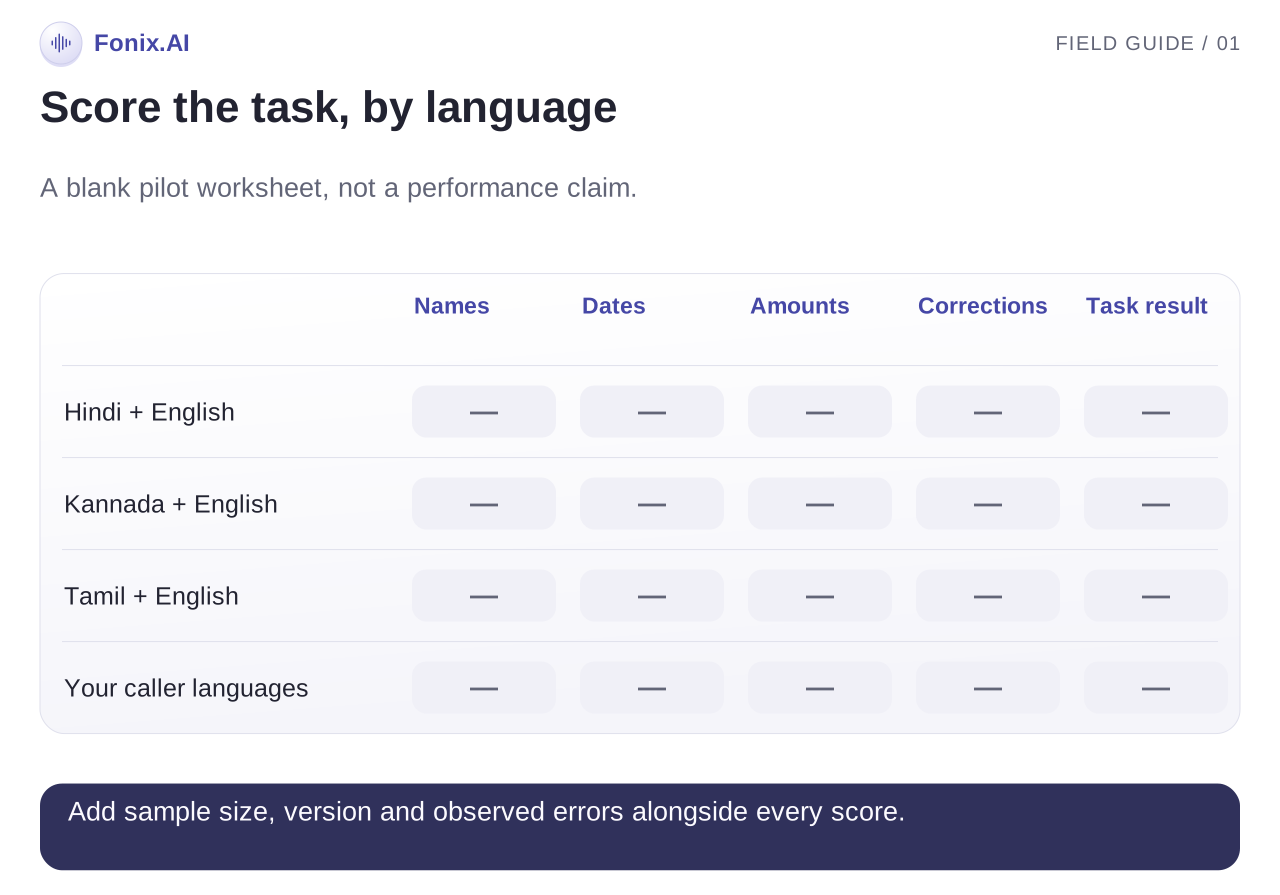
Review results by language, task, speaker change and noise condition. Include the number of reviewed examples next to every percentage. A result from a handful of synthetic calls should not be presented as a production performance estimate.
Fix the cause before expanding the language scope
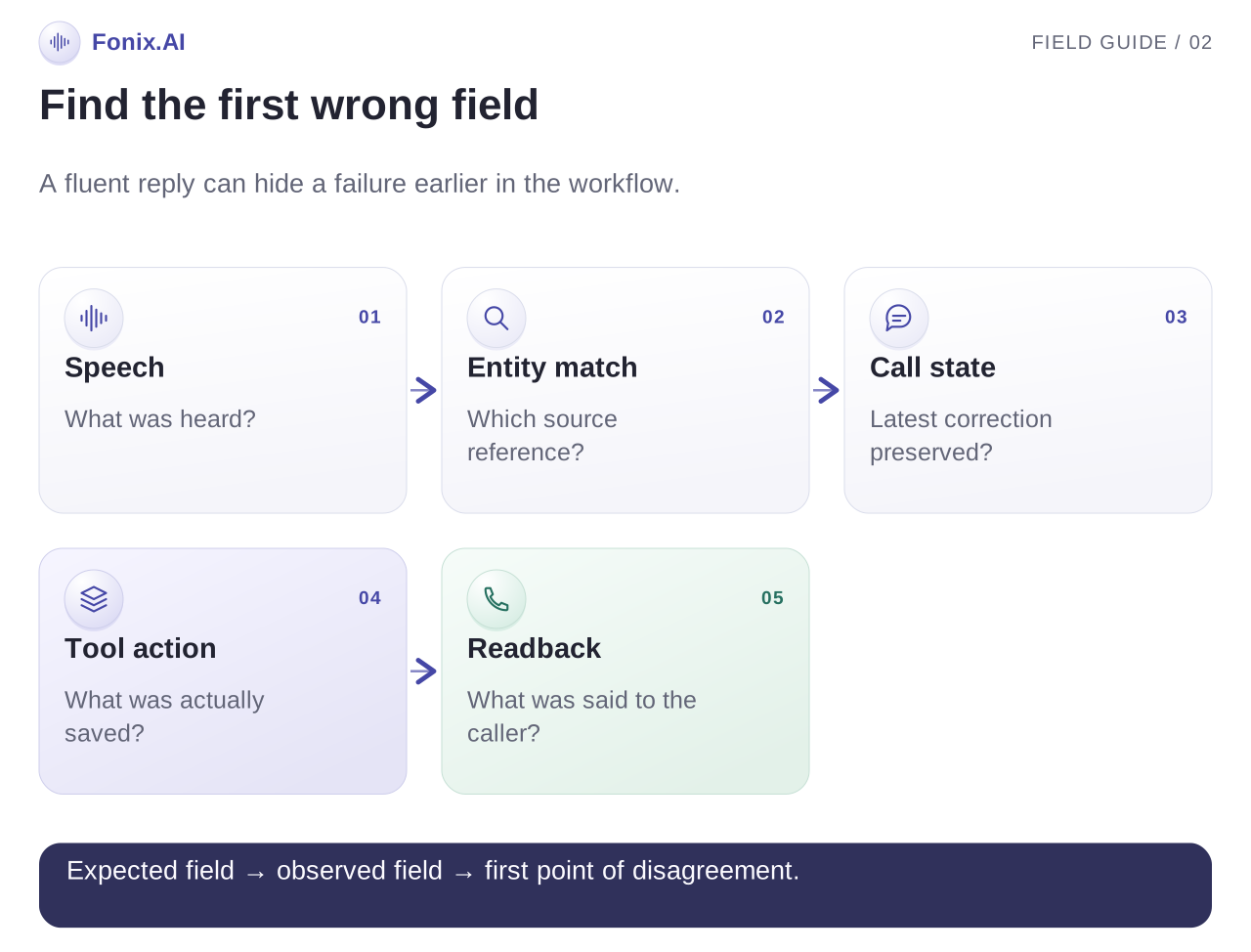
When a test fails, inspect where the error began: speech understanding, entity matching, conversational state, tool lookup, final write or spoken readback. The same wrong appointment can arise from several different problems.
Give the implementation team approved pronunciation examples and business vocabulary where supported. Keep the expected values tied to the source system. If a name remains ambiguous, configure a short clarification rather than encouraging a guess.
Repeat only the relevant tests after a change, then review a held-out set and full conversations to check that the improvement generalises. Record the version being evaluated, the source data and any changed instructions.
For mixed-language handoffs, verify that the person receiving the task gets usable context. A fluent assistant that saves an unreadable or incorrectly translated issue summary can still create unnecessary work for staff.
Bring your difficult words to a Fonix demo
Bring the actual caller-language mix, a list of business names, representative number and date phrases, and one complete task. Ask the team to demonstrate interruptions, corrections and a human request. Check the written result as carefully as the audio.
Use the clinic workflow or property enquiry workflow as the task context. The Fonix language page describes coverage; this scorecard helps evaluate suitability for your traffic.
Request a demo in your language mix. Set a language-specific review plan before expanding from a small pilot to several branches or regions.