
A practical guide / Fonix.AI
AI calling for car dealerships: booking a service against real workshop capacity
Workflows, exceptions and the questions to ask before deployment.
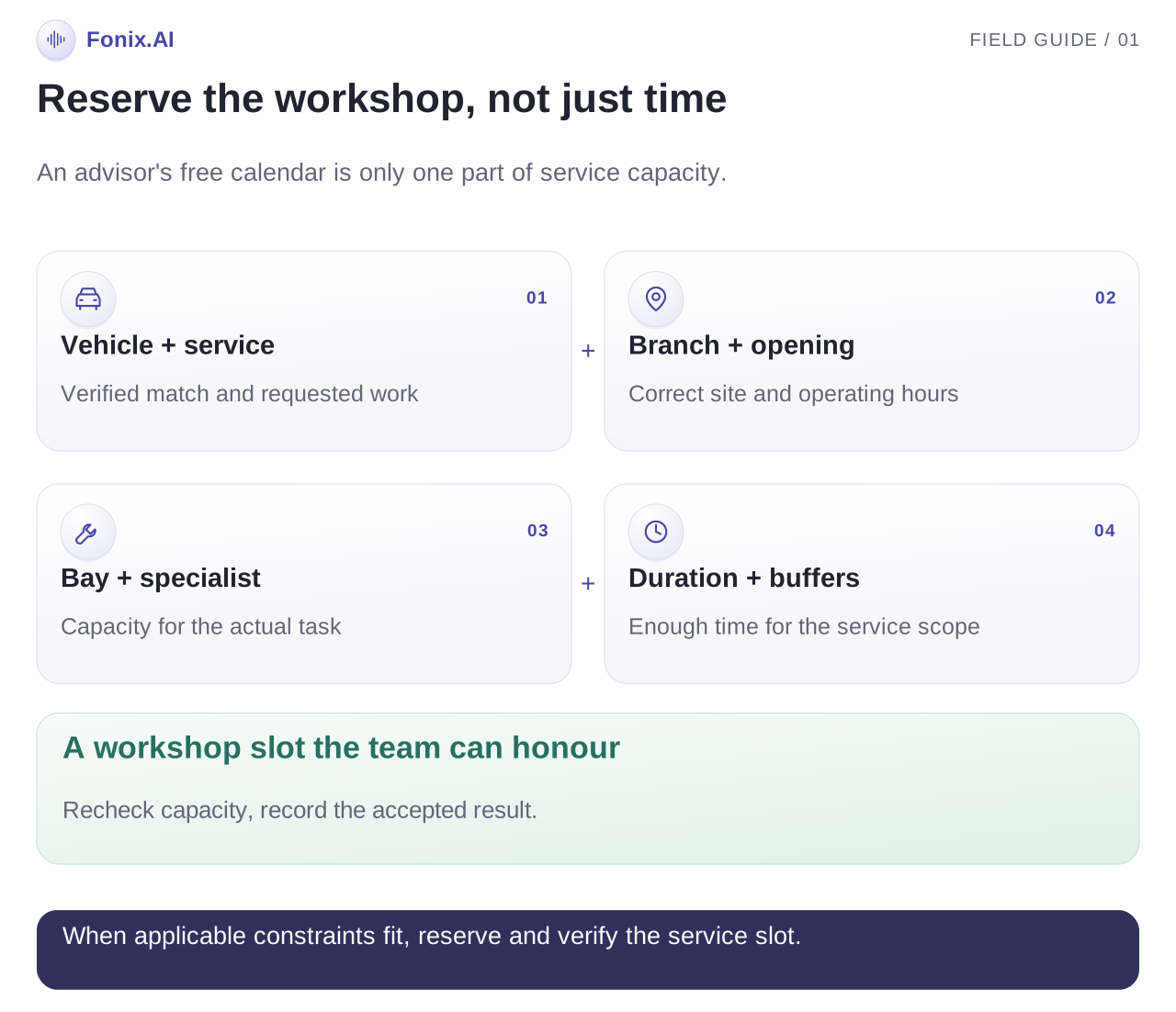
A service booking needs workshop capacity
AI calling for car dealerships can help a service team understand a vehicle enquiry, check an eligible slot and arrange an advisor follow-up. For workshop booking, a calendar opening is only part of availability: the branch also needs the right bay, technician capacity and service scope.
This guide focuses on service coordination. It covers vehicle identification, requested work, capacity, pickup preferences and a booking the workshop can fulfil. A generic appointment reminder starts after a booking already exists; the workflow here establishes whether that booking is feasible.
Fonix.AI supports business voice conversations in Indian languages. Evaluate the proposed workflow against your dealer-management, workshop and transport systems. Confirm the required lookups and booking actions rather than assuming an existing automotive connector.
Identify the vehicle and the requested work
Start with the enquiry reference, branch and approved contact context. A telephone number may relate to more than one vehicle or family member. Use the dealership's identification process before discussing private service records.
Capture the registration or internal vehicle reference, model where needed, requested service and the customer's stated concern. Keep their description intact. “A noise when braking” is a symptom to pass to an advisor, not a diagnosis the calling agent should produce.
Read back critical identifiers. Letter-number combinations, local registration formats and corrections can be difficult in mixed-language calls. Keep unverified vehicle matches visible rather than attaching the booking to the first similar record.
Use approved service information for the scope of a standard visit. Advice about mechanical faults, safety, warranty coverage or detailed repair estimates should follow the authorised advisor route. A booking conversation should not invent a repair decision.
Check capacity for the actual service
Your source of availability should reflect the branch's operating rules. A general advisor calendar may show a free slot while a required bay or specialist is unavailable.
| Requirement | Availability source | Booking consequence |
|---|---|---|
| Branch and opening period | Current branch schedule | Route to the correct location |
| Standard service duration | Approved service catalogue | Reserve the appropriate time block |
| Specialist or equipment | Workshop capacity rules | Offer only eligible slots |
| Diagnostic concern | Advisor triage process | Request review where scope is uncertain |
| Pickup or drop-off | Transport availability | Separate preference from confirmed transport |
| Existing booking | Current workshop record | Modify or retain it instead of duplicating |
If your current system only supports an advisor callback, describe the outcome as a callback request. Do not present a requested workshop time as a confirmed service slot when no capacity reservation was made.
Agree on the service, branch, day and time before writing the booking. Verify the reservation result and give the customer the confirmation reference your process supplies. Treat completion of the service as a later operational state.
Keep pickup and estimates attached to an owner
A customer may need transport, a cost estimate or confirmation of a promised turnaround. Each request has a different source and owner.
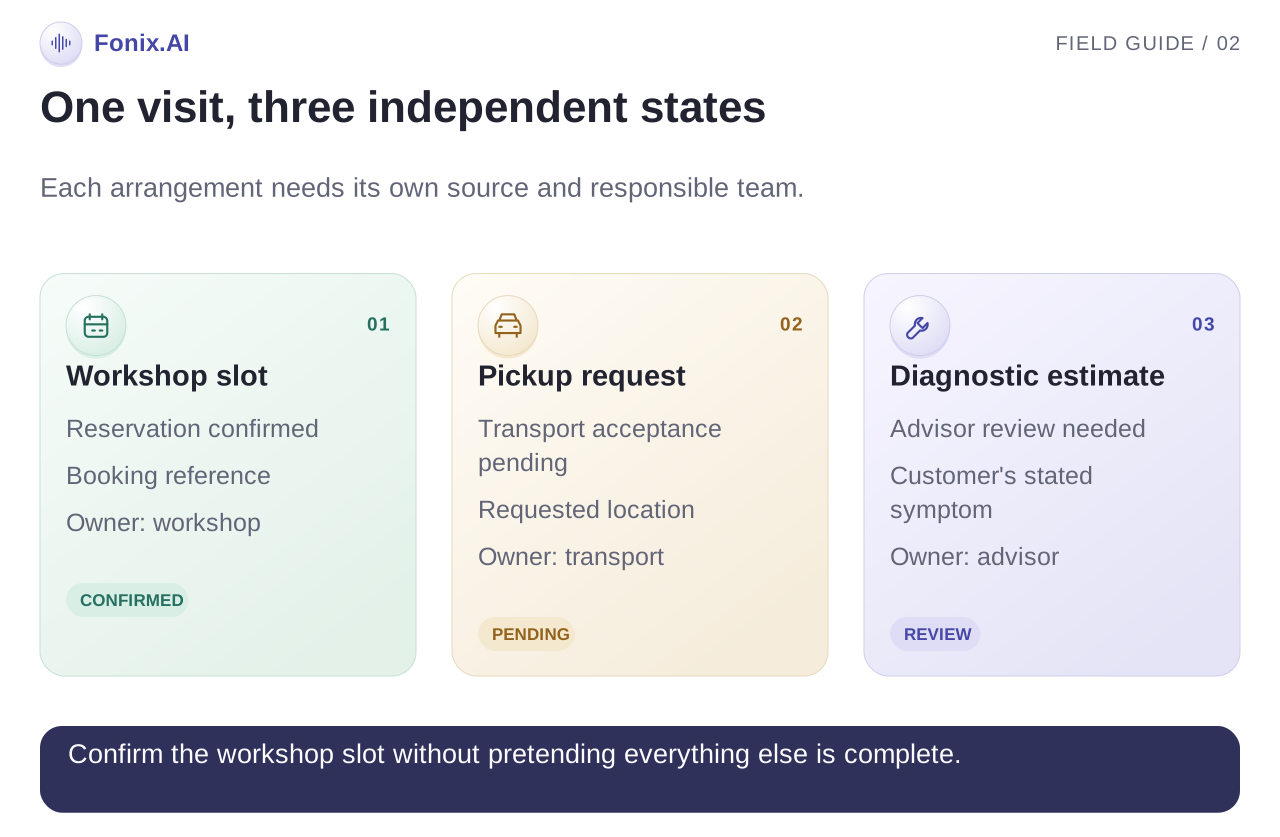
For pickup, capture the proposed location and time only through the approved process. Check whether transport is available and who accepts the assignment. A workshop booking can be confirmed while pickup remains pending; reflect both states accurately.
For an estimate, use only an approved current service price where applicable. A diagnostic or repair estimate may require inspection and advisor review. Preserve the customer's question and avoid turning an approximate discussion into a promised invoice.
When the customer requests a completion time, use the workshop's approved information. Record constraints such as “needs the vehicle before evening” without guaranteeing an unsupported handover time.
An illustrative workshop conversation
This fictional example assumes the vehicle match is verified and the workshop can book a standard service, but pickup requires a transport-team review.
Assistant: This is the automated service assistant for Oak Motors. You requested a service appointment at our East branch. Is now a suitable time?
Customer: Friday morning works. Pickup chahiye, and there is a sound when braking.
Assistant: I have noted Friday morning as your preference, a pickup request and the braking-noise concern for the advisor. I will check the workshop slot; pickup and the diagnostic work need their own confirmation.
The record should contain the requested service, the symptom in the customer's words and two distinct pending conditions. If a standard-service reservation succeeds, record it separately from an unresolved diagnostic scope or transport assignment.
Suggested fields include vehicle reference, branch, requested service, stated concern, confirmed booking reference, pickup request, transport result, advisor question and owner. These describe a possible workflow rather than a Fonix API contract.
Protect the booking when something changes
| Situation | Required response |
|---|---|
| A slot is taken while the customer agrees | Recheck and offer current alternatives |
| The vehicle record is uncertain | Clarify or assign review before booking against it |
| Specialist capacity is unavailable | Route or offer an eligible slot without inventing capacity |
| Pickup has no available driver | Preserve the request and explain its pending status |
| Booking write times out | Check the result before retrying |
| Customer changes the service scope | Recalculate eligibility and duration |
| Customer wants to reschedule | Protect the original until the replacement is confirmed |
For a replacement booking, confirm that the new reservation exists before cancelling the original through the agreed process. If the systems cannot perform the change atomically, document the recovery path and ownership of conflicting records.
Reconcile duplicate enquiries and later staff contact. A customer speaking to an advisor should not receive an independent automated booking sequence without your ownership process accounting for it.
Measure attended and completed service visits
Track eligible enquiries, useful conversations, confirmed workshop bookings, attended visits and completed services for the same cohort. Count pickup assignments accepted and fulfilled separately from workshop reservations.
Review bookings that the workshop could not fulfil because the wrong service duration, bay or specialist was selected. Also inspect wrong vehicle matches, duplicated reservations and unsupported promises about estimates or handover times.
Compare similar service types and branch periods. A quieter workshop can accept more requests regardless of calling automation. Include advisor and transport follow-up costs when assessing the pilot, and keep cancellations visible.
Bring one branch to the demo
Bring a masked vehicle enquiry, current service catalogue, workshop capacity rules and pickup process. Ask to see a specialist unavailable, a pickup pending and a booking with an uncertain write result.
Request a workshop-booking review to test the full record. The missed-call guide covers returning an unanswered service enquiry, and the appointment-reminder guide covers follow-up after a confirmed reservation.