

A practical guide / Fonix.AI
AI insurance renewal calls: current policy facts and an advisor-owned next step
Workflows, exceptions and the questions to ask before deployment.
Make a renewal conversation useful
AI insurance renewal calls can remind a policyholder about a renewal, explain approved current information and arrange a conversation with an advisor. The operational goal is a clear next step attached to the correct policy. Renewal interest, payment initiation and an issued renewed policy are separate states.
Fonix.AI supports business voice conversations in Indian languages. Use this guide to evaluate renewal coordination against your policy-administration, advisor and communication systems. Confirm the required connections and permissions for your deployment rather than assuming that every insurer or intermediary system is supported.
Keep information and logistics distinct from advice or policy decisions. Questions about changing coverage, suitability, exclusions or claims should reach the person authorised to answer them. The guide proposes a workflow, not an underwriting or coverage-advice service.
Resolve the policy and current renewal record
A contact may have multiple policies, and the same household number may appear on several records. Start from a stable policy reference, product, expiry date, current status, approved contact and assigned advisor. Apply the appropriate identity checks before discussing private details.
Read the latest renewal state before each call. A policy may already be renewed, cancelled or awaiting review. Suppress records that no longer need the reminder and avoid relying only on a list exported several days earlier.
Keep a version or timestamp for the quote and any approved explanation. A prior year's premium or coverage description is not necessarily the current renewal offer. The call should disclose which information it can explain and route uncertainty rather than guess.
Agree on the outreach process with the responsible business team, including timing, preferences, disclosure and escalation. Review applicable requirements before a campaign; do not treat a vendor's general compliance statement as approval for a specific renewal script.
Separate renewal facts from advisor questions
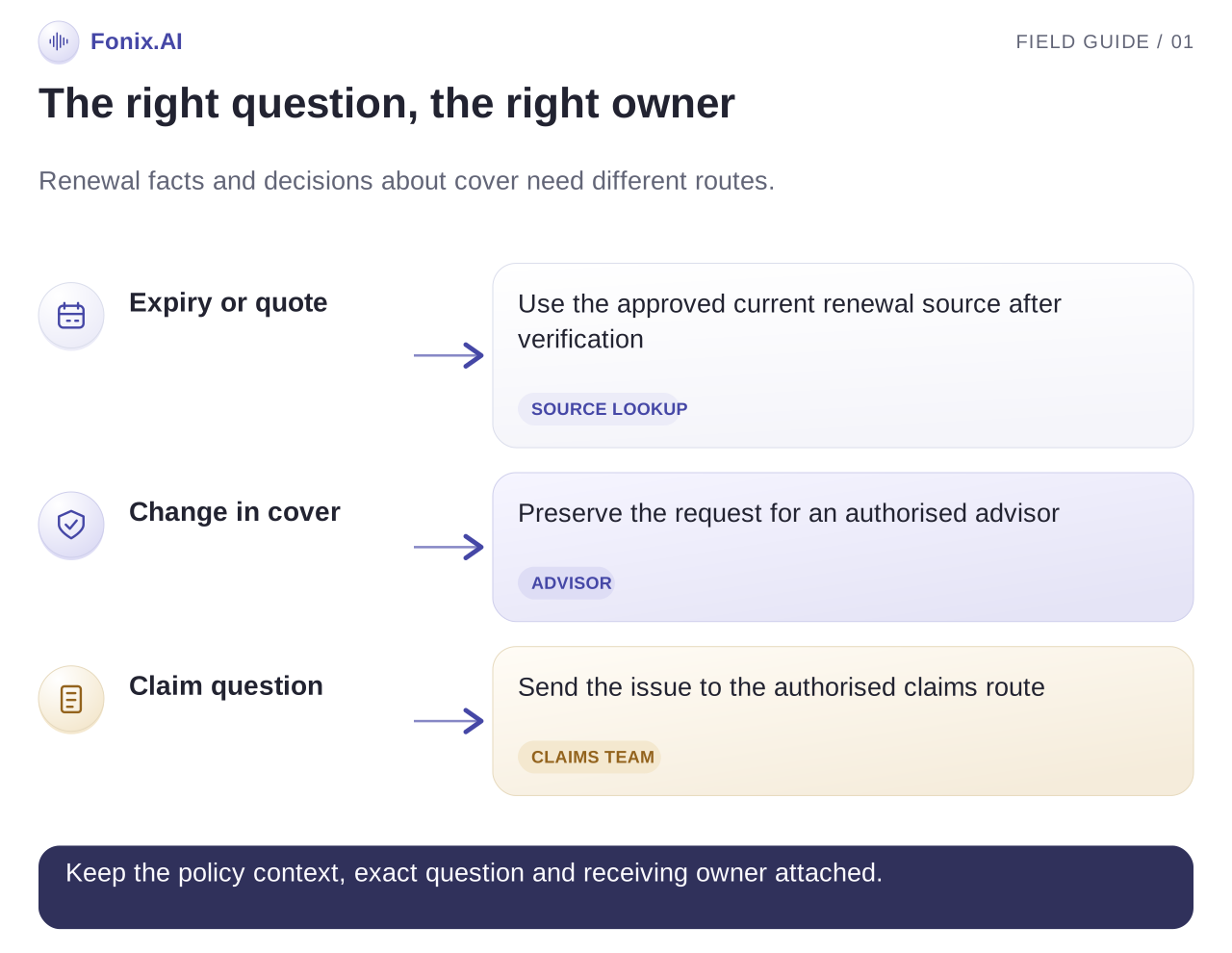
Use the agent for information that has a current approved source. Build an explicit destination for questions requiring judgement or a policy change.
| Request | Agent's task | Owner of the next decision |
|---|---|---|
| When is renewal due? | Read the verified expiry and renewal information | Policy operations for source conflicts |
| What is the current renewal amount? | Quote the approved current record after verification | Advisor or operations if the quote is unclear |
| I want to change the coverage | Capture the exact change requested | Authorised advisor |
| Does a treatment or event qualify? | Preserve the question without determining cover | Authorised policy/claims team |
| I renewed yesterday | Check the current policy state | Operations if payment and issuance differ |
| Please call later | Record one suitable callback preference | Assigned advisor or renewal team |
Avoid interpreting a request for more information as agreement to renew. Read back the requested next step so the policyholder can correct it. If a family member needs to join a discussion, record that preference without transferring private policy information prematurely.
Regional-language evaluation should include dates, policy references, amounts and corrections. A correct-sounding reminder with the wrong expiry date can create more work than an unanswered call.
Keep payment and policy issuance distinct
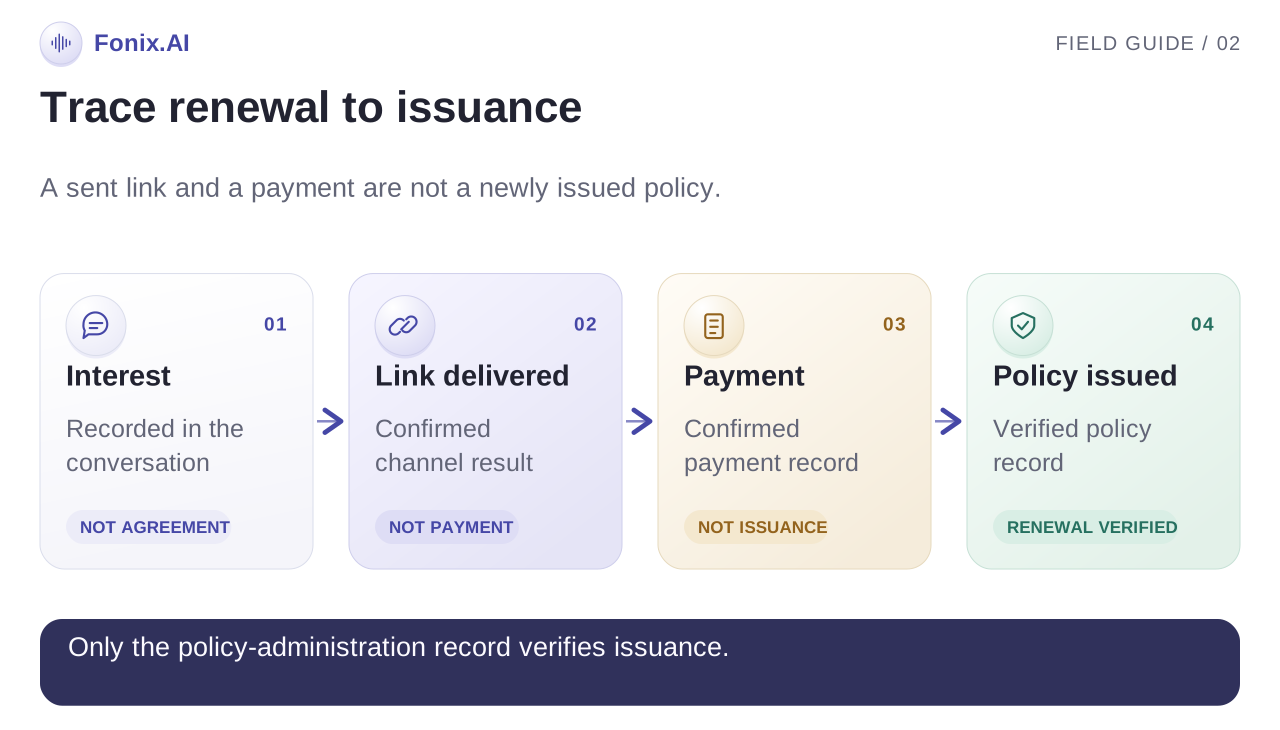
When an approved renewal link is configured, retrieve or generate it through the authorised process. Record whether the policyholder requested it and whether delivery was confirmed by the relevant channel.
A delivered link is not payment. A successful payment is not necessarily a policy already issued or a coverage change accepted. Use the administration system's confirmed state for the actual renewal result and preserve intermediate states for reconciliation.
If payment or issuance is pending, explain only the verified status and route the unresolved step. Do not announce that cover has continued merely because the person expressed an intention to pay.
Define the stop condition for reminder sequences. An issued renewal, an active advisor task or another ineligible state should prevent unrelated automated reminders according to your approved process. Recheck that state before queued attempts.
An illustrative advisor handoff
The following example concerns a fictional policyholder after verification. Assume the renewal source is current and the agent is permitted to explain its date.
Assistant: This is the automated renewal assistant for Maple Insurance Services. Your current record shows renewal due on 18 December. Would you like a reminder link or an advisor conversation?
Policyholder: I want to renew, but add my spouse. Premium change hoga?
Assistant: I have recorded your renewal interest and the request to add your spouse. An advisor needs to review the change and current quote. What time would suit that conversation?
The record should show renewal interest, a requested policy change and an advisor callback. It should not show an accepted quote, an added member or a completed renewal.
Suggested fields include policy reference, current renewal state, quote version, verified contact, requested change, advisor question, callback preference, link result and issued-policy reference. They are proposed workflow fields rather than a published Fonix API.
Test the conflicts that matter
| Situation | Required response |
|---|---|
| Policy renewed after the list was exported | Stop the reminder after a current lookup |
| Several policies share the contact | Identify the correct record through the approved process |
| Prior-year and current quotes differ | Use the approved current version; route unresolved conflict |
| Policyholder asks about a claim | Preserve context and use the authorised claims route |
| Link creation times out | Check whether it was created before retrying |
| Payment succeeds but issuance is pending | Keep the states separate and assign reconciliation |
| Advisor callback is not accepted | Keep the task open with a responsible queue |
Include a coverage-change request in the demo. It tests whether the agent respects its information boundary and whether the advisor receives enough context to help.
Measure renewal outcomes without hiding open work
Track eligible policies, useful verified conversations, advisor requests accepted, links delivered, payments confirmed and renewals issued for the same expiry cohort. Separate no-contact records, declined renewals and pending changes.
Review policy-reference accuracy, incorrect quote readbacks, reminders after renewal and age of open advisor tasks. These indicators reveal failures that a simple call-connect rate hides.
Compare similar products, expiry periods and outreach treatments. A policyholder renewing after a call does not establish that the call caused the renewal. Preserve the baseline and any parallel channels when interpreting the pilot.
Bring one renewal process to the demo
Bring a masked policy record, current renewal information, advisor destinations and the statuses your administration system supplies. Demonstrate an already-renewed policy, a coverage question and a payment with issuance pending.
The support guide covers verified lookups and escalation, while the EMI reminder guide explains the distinction between a stated intention and a confirmed payment. Request a renewal workflow review to test your process and languages.