

A practical guide / Fonix.AI
AI interview scheduling calls: coordinate calendars and preserve the candidate's choice
Workflows, exceptions and the questions to ask before deployment.
Coordinate an interview the calendars can support
AI interview scheduling calls help a recruitment team agree on an available meeting, confirm it in the relevant systems and handle changes. The useful outcome is an interview with the correct candidate, round, panel and time. Capturing someone's preferred time is not enough to establish a booking.
This guide focuses on coordination rather than selecting candidates or making hiring decisions. Start from a recruiter-approved application and scheduling task. Keep employment judgements and changes to selection status with the people authorised to make them.
Fonix.AI supports business conversations in Indian languages. Evaluate scheduling with your applicant-tracking system, calendars and invitation process. Confirm which systems and actions are connected for the deployment rather than assuming every ATS or calendar is supported.
Resolve the current application and interview round
Use a stable application reference, role, current scheduling status and round. A candidate may have applied for several roles or already completed an interview. An old task should not invite them to a superseded round.
Read the latest ATS state before contact. Suppress withdrawn applications, cancelled rounds and tasks that recruiters already completed according to your process. Preserve the original scheduling request and its owner so corrections can be traced.
Open with the employer identity, automated assistant and the actual application context. Ask whether it is a suitable time to coordinate. If the person does not recognise the role, resolve the mismatch rather than continue discussing a different application.
Keep sensitive application information out of unverified conversations. Use the employer's appropriate identification and access process for the fields the agent needs. Scheduling generally needs less information than a screening or evaluation discussion.
Find the intersection of candidate and panel availability
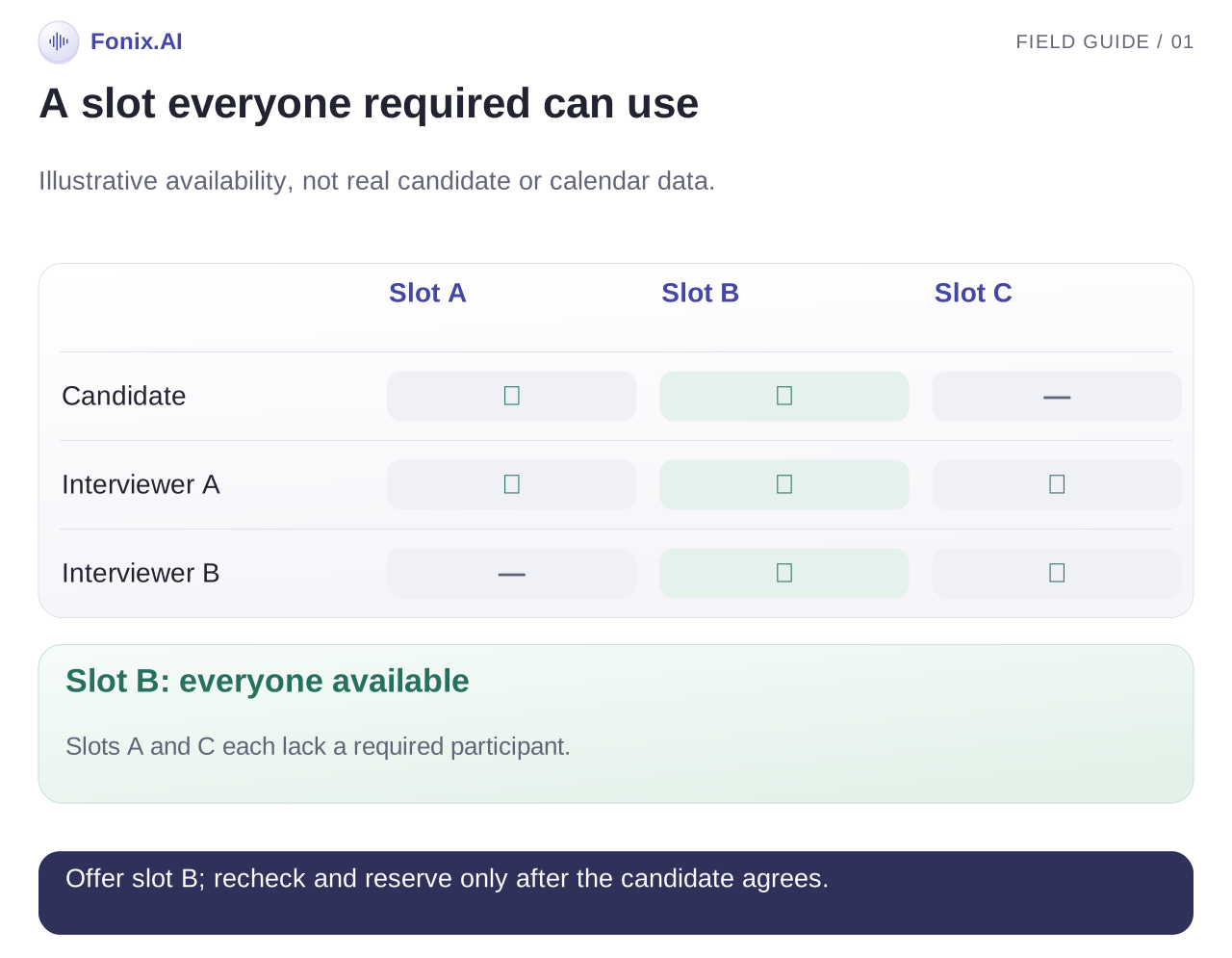
Availability is a combination of candidate preference, interviewer calendars and the requirements of the round. A free calendar slot is not sufficient if a required panel member, room or meeting resource is unavailable.
| Constraint | Source | What to verify |
|---|---|---|
| Interview round | Current ATS task | Correct role, duration and required participants |
| Panel availability | Approved calendar access | All required participants can attend |
| Candidate preference | Conversation and confirmed readback | Date, time, time zone and constraints |
| Meeting resource | Room or video-link process | Required resource can be reserved |
| Booking policy | Recruitment rules | Notice period, buffers and allowed changes |
| Existing reservation | ATS and calendar | Avoid duplicate or conflicting meetings |
Offer a small set of eligible slots and allow the candidate to request another time. Record constraints rather than forcing an unsuitable option. If no valid intersection exists, create a recruiter coordination task with the candidate's actual availability.
Read back the day, date, time and time zone. Avoid relative phrases such as “tomorrow at eleven” without a clear date and zone. A remote candidate may hear the employer's local time as their own.
Write the booking and reconcile invitations
After agreement, reserve the slot through the approved scheduling process. Check the result before announcing confirmation. If another booking takes the slot during the call, offer a currently available alternative.
Keep the calendar reservation, ATS scheduling state and invitation delivery distinct. A calendar event may exist while the ATS update fails or a notification is still pending. Record the partial result and assign recovery rather than marking all three complete.
Use stable references for the booking attempt and resulting event where available. If a write times out, inspect whether the event exists before retrying. Repeated calls should not create several events for one interview round.
Explain the next step accurately. Give the confirmed slot and the invitation channel configured for your process. If the meeting link or instructions are still pending, preserve that status and the responsible owner.
An illustrative time-zone correction
The following fictional conversation assumes the panel has an available slot, with the employer based in India and the candidate temporarily in Singapore.
Assistant: This is the automated scheduling assistant for Pine Systems about your approved technical interview. One available option is 14 November at 11:00 a.m. India time. Would that work?
Candidate: I am in Singapore that week. Eleven here means something else. Can we do later?
Assistant: Thank you for clarifying. I will use Singapore time for your readback and check later panel availability. I will confirm both time zones before booking.
The record should preserve the candidate's current zone and agreed absolute meeting time. It must not keep the first offered slot merely because a scheduler extracted “eleven” from the conversation.
Suggested fields include application reference, round, participant set, candidate zone, agreed start and duration, event reference, ATS result, invitation status and coordination owner. These are workflow fields, not a Fonix API specification.
Protect the original during rescheduling
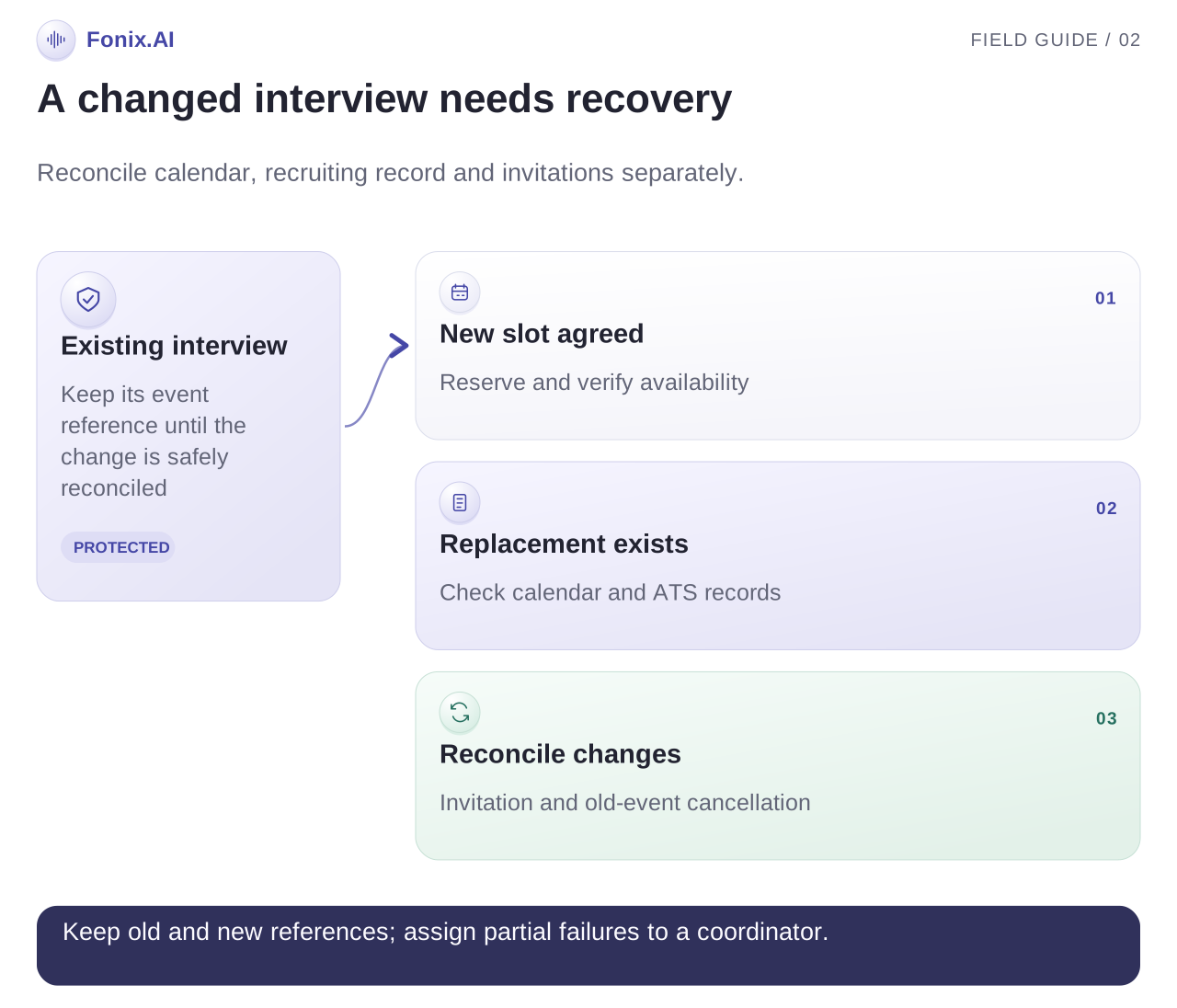
When the candidate requests a change, retrieve the current booking and new availability. Keep the original intact until your process confirms the replacement or explicitly decides to cancel it.
For systems without one atomic reschedule operation, define how failures are recovered. A new event created with the old event still active needs reconciliation; an old event cancelled before the new one exists leaves the candidate without a meeting.
| Exception | Expected behaviour |
|---|---|
| Slot becomes unavailable during agreement | Offer a current alternative |
| One panel member declines | Assign recruiter review of the participant requirement |
| Candidate withdraws | Stop scheduling and record the withdrawal request for the recruiter |
| ATS and calendar disagree | Preserve references and assign reconciliation |
| Event creation result is unknown | Look up the result before retrying |
| Candidate needs different instructions | Route the request to the appropriate coordinator |
| Invitation cannot be delivered | Retain the confirmed meeting and own the delivery issue |
A request for an accommodation or other change should be preserved for the employer's responsible team. Do not let the agent determine candidate eligibility from the request or infer a hiring outcome from a missed scheduling call.
Measure confirmed meetings and coordination failures
Track eligible scheduling tasks, useful conversations, verified bookings, invitations delivered and attended interviews for the same cohort. Keep scheduling status separate from evaluation status and interview outcome.
Measure time from the recruiter-approved task to a confirmed slot. Also inspect duplicate events, wrong time zones, unaccepted panel invitations and meetings left without instructions. A fast call can still create an unusable interview.
Compare similar roles, rounds and panel availability. Changes in recruiter workload or panel capacity can affect booking speed independently of voice automation. Include the effort spent repairing partial writes and reschedules in the pilot cost.
Bring one interview round to the demo
Bring a masked scheduling task, required participants, calendar permissions, candidate time zones and reschedule rules. Ask to see a slot race, a calendar/ATS conflict and a candidate withdrawal during an active sequence.
The appointment-reminder guide covers stale reminders after a booking changes, while the multilingual guide helps test date and time corrections. Request an interview-coordination review to evaluate the conversation and all resulting records.