

A practical guide / Fonix.AI
AI voice agent pricing in India: calculate the workload behind the quote
Workflows, exceptions and the questions to ask before deployment.
Compare the workload behind the quoted rate
AI voice agent pricing in India is easier to evaluate when you define the task, the metered usage and the costs around it. A per-minute rate is only one input. A meaningful comparison uses the same connected calls, duration, transfer behaviour and verified outcomes across proposals.
This guide explains the cost model behind our editable workload calculator. Its example values are hypothetical inputs, not Fonix rates or a market-price survey. Use the live Fonix pricing page and a dated proposal for current commercial terms.
The AI calling-software guide covers platform selection. This page concentrates on billing and operational economics so you can compare the cost of completing a task rather than a headline rate alone.
Define a workload that both vendors can price
Start with one period and one task, such as confirming eligible orders or arranging support callbacks. Count connected conversations separately from attempts. List average duration, the distribution of call lengths, transfers and follow-ups.
| Workload input | Why it matters | Source to bring |
|---|---|---|
| Connected calls | Determines the conversations that may be billed | Call logs or pilot plan |
| Duration by call | Billing increments may round each call separately | Completed-call timestamps |
| Attempts with no conversation | Some proposals meter these differently | Carrier outcomes and rate scope |
| Transfers and carrier legs | A second active leg may add usage | Transfer logs and quote definitions |
| Additional follow-up calls | Another conversation adds another unit of usage | Workflow sequence and stop rules |
| Verified task outcomes | Establishes the denominator for task cost | Source-system confirmation |
Use a measured sample where possible. An average duration is useful for a first estimate but cannot reproduce per-call rounding exactly when individual calls have different lengths.
If retries are already included in the connected-call count, do not add them again. Likewise, a bundled rate should not receive another speech or model charge unless the proposal explicitly excludes it.
Read the meter before multiplying minutes
Ask when billing starts, when it stops, what minimum applies and whether increments round each call or the monthly total. Confirm how silence, hold time, voicemail, transfers and disconnected calls are counted.
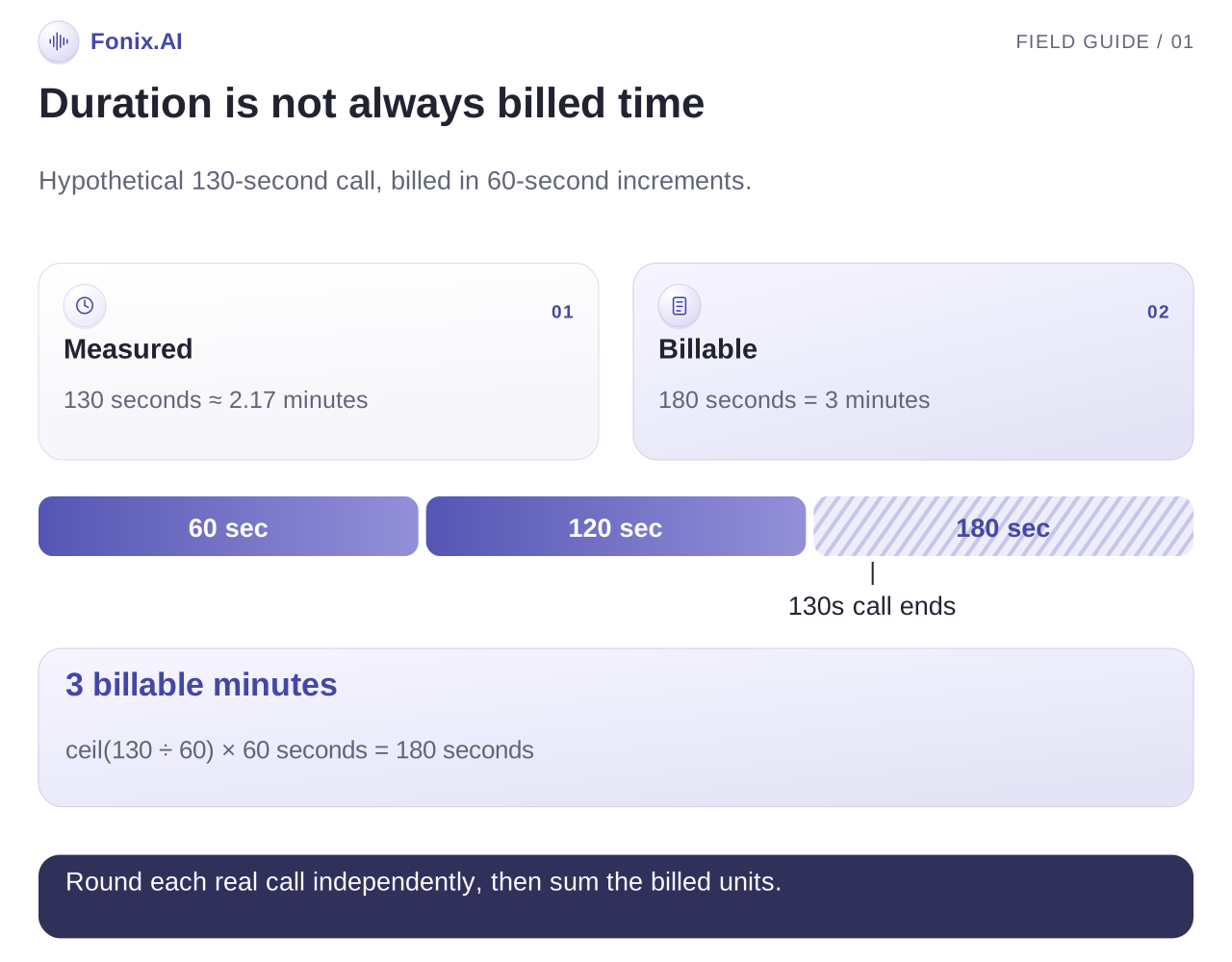
For a simplified workload in which all calls have the same duration, billable minutes equal connected calls multiplied by the duration rounded up to the stated increment. If the increment is 60 seconds, an illustrative 130-second call becomes three billable minutes. At a one-second increment, the same conversation contributes approximately 2.17 minutes.
For actual logs, round each call independently according to the contract, then sum the result. Rounding the average and multiplying can overstate or understate the bill. Minimums, different carrier legs and separate component meters need their own calculations.
Confirm the scope of a quoted rate: telephony, speech recognition, speech generation, model use, runtime, recording storage and tools. Ask for the rate definition in writing. A low rate with several separate meters may still suit a workload, but it is not directly comparable to a bundled rate without those additional inputs.
Include fixed and operating costs
Add platform fees, number rental, setup allocation, implementation support, monitoring, record review and manual exception handling where they apply. Keep one-time and recurring costs visible rather than hiding implementation in a monthly average without explanation.
Allocate setup over the period relevant to your decision. A six-month pilot and a multi-year deployment have different cost views. Report the original setup amount as well as the allocation so someone reviewing the calculation can change the assumption.
For an on-premise proposal, include the hardware and operating responsibilities your team actually takes on. The on-premise voice guide covers infrastructure boundaries and capacity. Monthly conversation minutes alone do not determine the hardware needed for peak simultaneous calls.
Treat taxes, minimum commitments, discounts and credits according to the dated proposal. The workload calculator excludes tax and does not apply a plan's minimum spend or bundled allowances automatically.
A transparent illustrative calculation
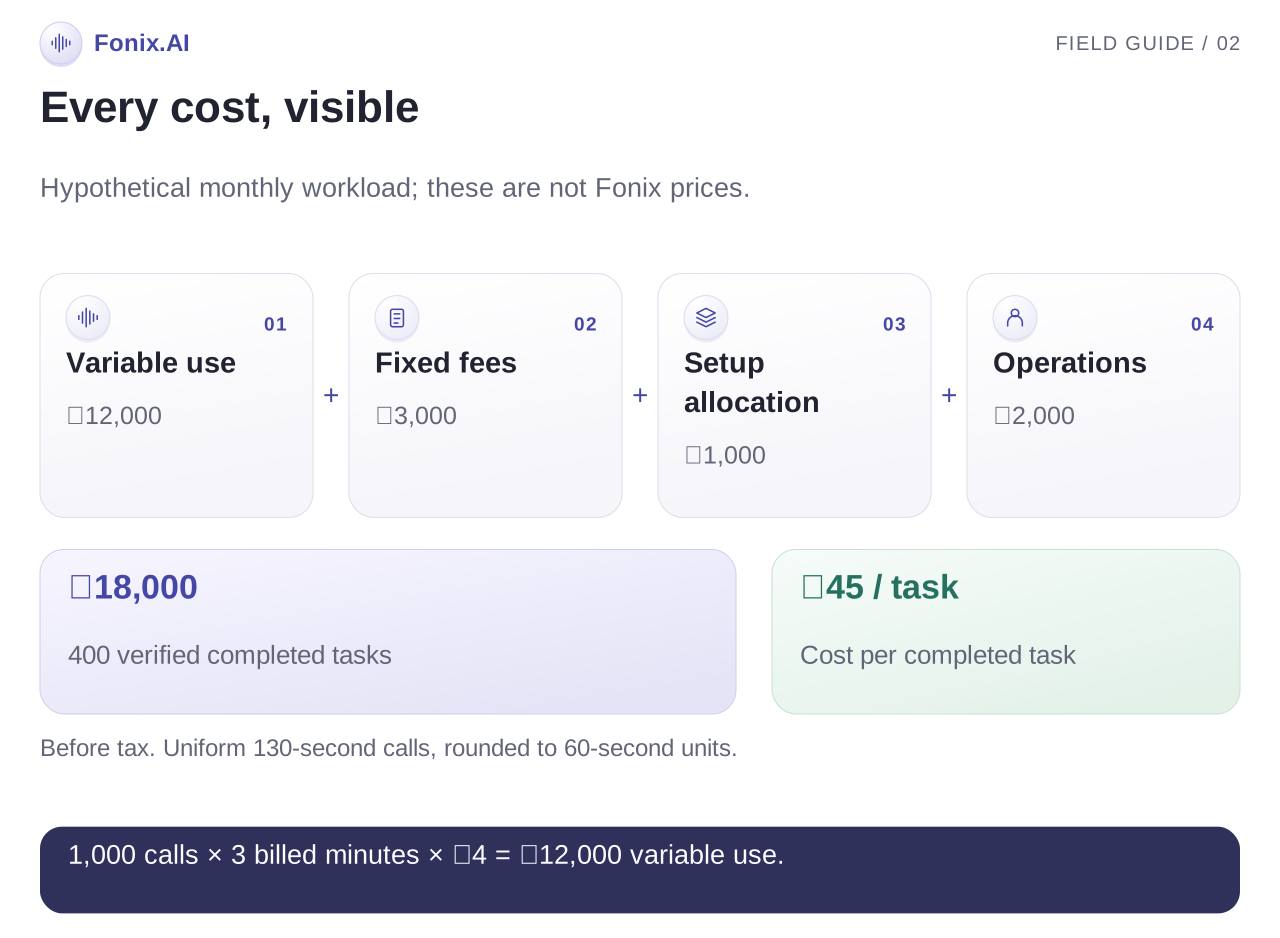
Suppose a fictional workload has 1,000 connected calls, each lasting 130 seconds, with 60-second billing increments. Assume a hypothetical all-in variable rate of ₹4 per billable minute, ₹3,000 in fixed monthly costs, ₹1,000 in allocated setup and ₹2,000 in manual operating work.
The conversation workload is approximately 2,166.67 measured minutes. Under the uniform-duration assumption, it becomes 3,000 billable minutes. Variable cost is ₹12,000; total estimated cost is ₹18,000 before tax. If 400 tasks are independently verified as completed, the estimated cost is ₹45 per completed task.
These numbers show the arithmetic, not a product price or guaranteed outcome. If callers have different durations, replace the uniform assumption with a log-level calculation. If ₹4 covers only the platform component, add the missing metered costs instead of calling it all-in.
The editable calculator uses this same model. Transfer usage can be added separately, provided it is not already included in the connected-call duration. Its “completed tasks” field is an observed or planned input; the calculator does not forecast conversions.
Compare costs for the same completed task
Define completion in the operational system: a confirmed booking, a delivered shipment or an accepted case resolution. A generated transcript, successful call connection or payment intention is not interchangeable with those outcomes.
Calculate total operating cost divided by verified completed tasks for the same cohort. Keep unresolved work and later cancellations visible. If there are no completed tasks, cost per outcome is undefined; report the total expense rather than divide by an invented denominator.
When comparing pilots, use similar task scope, source quality and language mix. A provider handling simpler questions may show a lower cost per outcome without performing the same work. Include human review when comparing a fully automated flow with an assisted one.
Ask for a proposal you can reconcile
| Question | Evidence that makes the answer useful |
|---|---|
| What exactly is a billable minute? | Start/stop rules, minimum and rounding examples |
| Which components are included? | A component list with separate rate definitions |
| How are transfers charged? | Carrier-leg and agent-runtime treatment |
| What happens after a failed call or tool action? | Attempt billing and retry rules |
| Are there minimum commitments? | Spend floor, allowance and expiry terms |
| What setup work is required? | Deliverables, owners and one-time amount |
| How do we reconcile the invoice? | Usage export and references matching call records |
Test a short call, a long call, no answer and a transfer against the provider's stated meter. Compare the usage export to your logs. A spreadsheet estimate is useful, but an invoice that can be reconciled is stronger evidence.
Bring your workload to a pricing review
Bring connected-call counts, duration samples, carrier routing, transfer rates and one clearly defined task outcome. Request a voice workload estimate and confirm rates through the current pricing page.
Use the calculator to prepare questions and compare assumptions. It is a planning tool with visible inputs, not a vendor quote or a promise of savings.
Your workload / editable estimate
Try the workload calculator.
The starting values are hypothetical examples, not Fonix prices. Enter the rates and billing rules from your own quote.
Include connected retries once.
Uniform-duration estimate.
Rounded up for each example call.
Use your quote's included components.
Only usage outside the call meter above.
Set zero if included in your rate.
Platform fees and numbers, if applicable.
Choose and document your allocation.
Review, support and manual follow-up.
Same cohort and month as these costs.
Estimated monthly total / before tax
₹18,000.00
- Measured conversation minutes
- 2,166.67
- Billable conversation minutes
- 3,000
- Variable conversation cost
- ₹12,000.00
- Additional transfer cost
- ₹0.00
- Cost per completed task
- ₹45.00
Assumes every call has the entered duration. For real billing, round each call in your logs before summing. Excludes tax, plan minimums, credits and allowances; add any applicable costs to your estimate.