

A practical guide / Fonix.AI
Conversational AI IVR: where it helps and how to migrate one branch
Workflows, exceptions and the questions to ask before deployment.
Choose which calls benefit from conversation
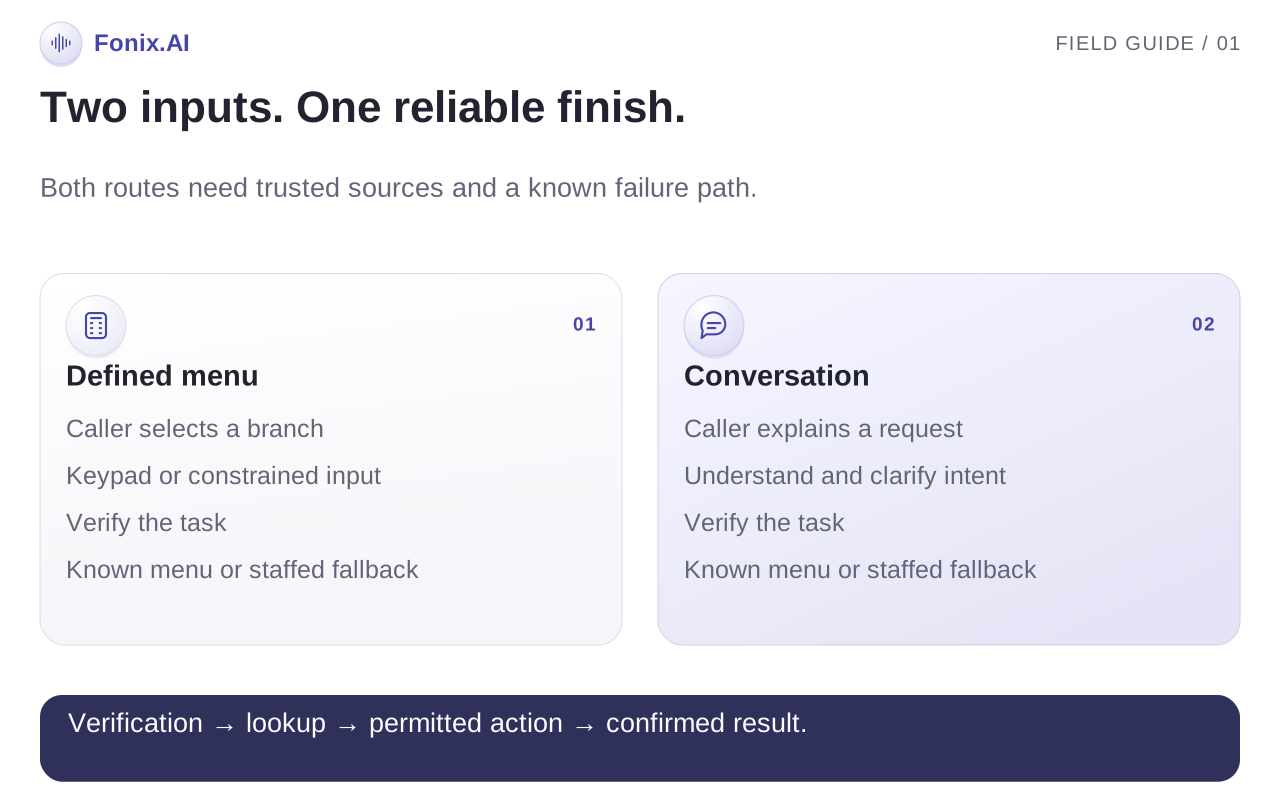
Conversational AI IVR lets callers describe a request in natural speech and uses that request to select a route or complete a permitted task. Traditional IVR commonly uses defined prompts, keypad choices or constrained speech options. The practical choice is which approach helps a specific call path and how the caller can continue when it fails.
A short, familiar menu can work well for a small set of stable destinations. Conversation becomes useful when callers struggle to choose a category, need a language switch or want a task completed against a business system. Neither approach removes the need for verification, current information and a working human route.
Fonix.AI provides voice conversations for business workflows. Use one troublesome IVR branch as the evaluation scope. Confirm routing, transfers, keypad support and any business-tool connections for the proposed setup rather than assuming every telephony feature is available in every deployment.
Audit a branch before replacing the call tree
Draw the current route from entry to outcome. Note each prompt, language choice, destination, transfer and failure path. Use available call records to identify repeated menu selections, abandonment, misroutes and transfers between teams.
Pick a branch with a clear purpose, such as order status. Define who should reach it, what information is needed and what successful completion means. Keep unrelated billing and account-change requests routed through their approved paths.
Write a baseline for the branch: eligible calls, completed tasks, transfers, unresolved calls and repeat contacts within a defined window. A shorter call is not automatically better if the customer has to call again.
Ask staff which words callers use for the issue. A menu labelled “fulfilment” may receive calls described as “my parcel has not arrived.” That vocabulary gap is a concrete reason to evaluate intent-based routing, rather than replace a menu because conversation sounds more modern.
Compare task behaviour rather than labels
| Requirement | Defined-menu approach | Conversational approach | What to evaluate |
|---|---|---|---|
| Small stable destination list | Direct menu selection may be sufficient | Speech can add another route | Time and effort to reach the right destination |
| Caller uses varied issue descriptions | Caller must choose the nearest category | Interpret and clarify the request | Misroutes and clarification success |
| Account-specific status | Requires a lookup behind the selected branch | Requires the same trusted lookup behind intent | Verification and source accuracy |
| Multiple languages | Separate prompts and routes may be needed | Language-aware conversation may help | Actual task success in each language |
| Unclear audio or understanding failure | A known menu can remain available | Needs clarification and a defined fallback | Whether the caller can still progress |
| A permitted business action | Deterministic branch with action checks | Conversational input with action checks | Confirmed result, not spoken assurance |
Do not confuse conversational input with unrestricted action permissions. Understanding “cancel my order” does not establish the caller's authority, order eligibility or whether cancellation succeeded. Both architectures need those checks.
Design an intent-to-action contract
Define the supported requests and their permitted outcomes. A caller can ask for something outside the pilot; the system should recognise that boundary and use an appropriate route instead of stretching a supported task to fit.
For an order-status branch, the contract might be: identify the request, establish access through the approved process, read current status, explain the supported next step and offer escalation where needed. Cancellation could remain a separate staff-reviewed route.
Preserve the original request and any clarification in the handoff record. A useful routing result contains intent, verified account or case reference where permitted, lookup result, action result and receiving destination. These are suggested design fields, not a claimed Fonix API schema.
Use the caller's correction to update conversational state. If “I want delivery status” becomes “actually the package arrived damaged,” the system should re-evaluate the route instead of continuing the old lookup flow. Clarify the current request before exposing account details or taking an action.
A worked branch: from request to route
This illustrative call uses a fictional store. Assume account verification has an approved process and the delivery lookup is part of the proposed deployment.
Assistant: Welcome to Willow Store's automated assistant. Please tell me what you need help with. You can also ask for a person.
Caller: Order ka status chahiye. Actually delivered dikha raha hai, but parcel mila nahi.
Assistant: The order shows delivered, but you have not received it. I will follow our verification process and route this as a delivery issue rather than only read the status.
The important distinction is the requested task. Reading “delivered” back to this caller would not resolve the issue. The workflow needs the relevant delivery-support route and the disputed-status context.
After any verification and lookup, a confirmed ticket or accepted transfer should determine the final message. If a transfer fails, the caller needs the configured alternative rather than an indefinite hold.
Keep a known route through failure
Define clarification limits and the point at which a caller gets a fallback. The fallback may be a menu, a staffed queue or a callback process, depending on what your telephony setup supports and what the business can operate.
| Failure | Useful behaviour | Acceptance test |
|---|---|---|
| Request is not understood | Ask a relevant clarification, then use a known route | Caller can escape repeated misunderstanding |
| Caller requests an unsupported task | Explain the scope and route appropriately | No invented completion |
| Caller wants a person | Use the configured staffed destination | Transfer availability and timeout are checked |
| Account verification fails | Keep account details protected | Approved alternative remains available |
| Business lookup fails | Explain that the result is unavailable | No answer generated from a guessed status |
| Selected queue is closed | Use the approved after-hours path | Callback has an owner and correct expectation |
Ask specifically about keypad input and existing IVR coexistence. Treat these as setup requirements to demonstrate, rather than assume that adding a voice agent automatically preserves every current menu function.
Migrate one branch with a rollback path
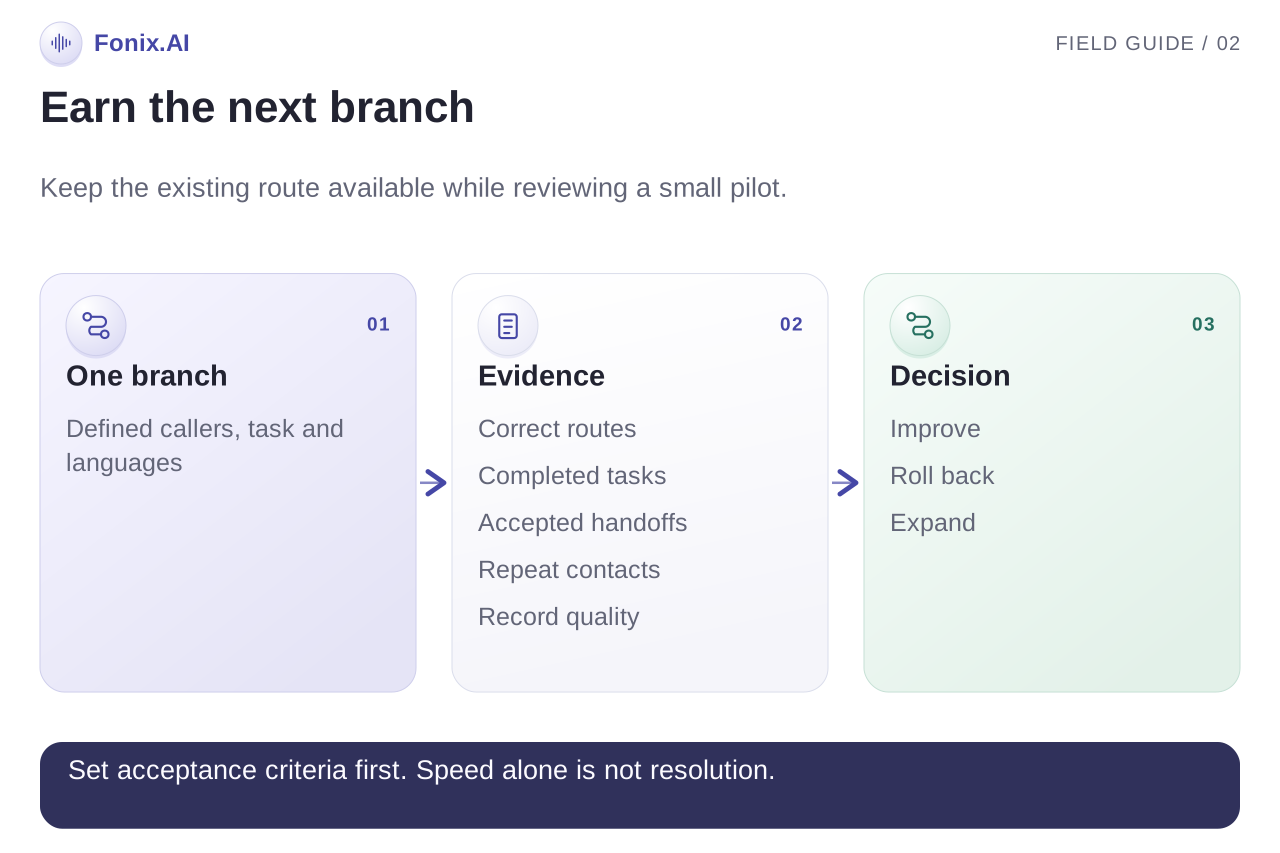
Keep a documented route back to the existing branch during the pilot. Agree how eligible calls are selected, which languages are included and when the pilot runs. If you compare two routes, use similar call groups and record routing changes that could affect the results.
Run scripted success and failure tests before live traffic. Then review an appropriately handled sample of actual outcomes with support staff. Look for misclassified requests, repeated verification, incorrect lookups, missing tickets and transfers without context.
Expand only after the first branch meets the agreed task and operational criteria. Adding every intent at once makes it harder to identify whether a failure comes from language understanding, route definitions, permissions or source-system integration.
Measure whether callers reached a useful finish
Compare completed tasks divided by eligible calls, correct routes, accepted handoffs, abandonment and repeat contacts for the same issue. Review handling time alongside those measures, rather than treating speed as the sole outcome.
Segment by issue, language and time of day. An aggregate improvement may conceal a failing after-hours path or an unsupported language. Review a sample of the underlying records to check that “resolved” actually means a verified answer or completed action.
The customer support voice-bot guide goes deeper into trusted lookups and escalation. The calling software guide covers broader integration and purchasing decisions.
Request a review of one IVR branch. Bring the current call tree, baseline outcomes, language mix and fallback requirements so the demo can answer a concrete migration question.