
A practical guide / Fonix.AI
AI abandoned cart recovery calls: a practical guide for D2C teams
Workflows, exceptions and the questions to ask before deployment.
Recover the unanswered question behind checkout
AI abandoned cart recovery calls can help a D2C team understand why an eligible shopper left checkout and offer an approved next step. The aim is to resolve a question or obstacle, then verify whether an order followed. A promise to purchase, a sent link and a paid order are different outcomes.
Cart recovery happens before a completed order. COD confirmation verifies an existing order before dispatch; NDR calling addresses a shipment after failed delivery. Keeping those states separate prevents the wrong call from reaching a customer.
Fonix.AI provides business voice conversations in Indian languages. Use this guide to evaluate a cart workflow against your store and contact policies. Store events, checkout links and product lookups require confirmed deployment connections; this page does not imply a native ecommerce plugin.
Recheck the cart immediately before contact
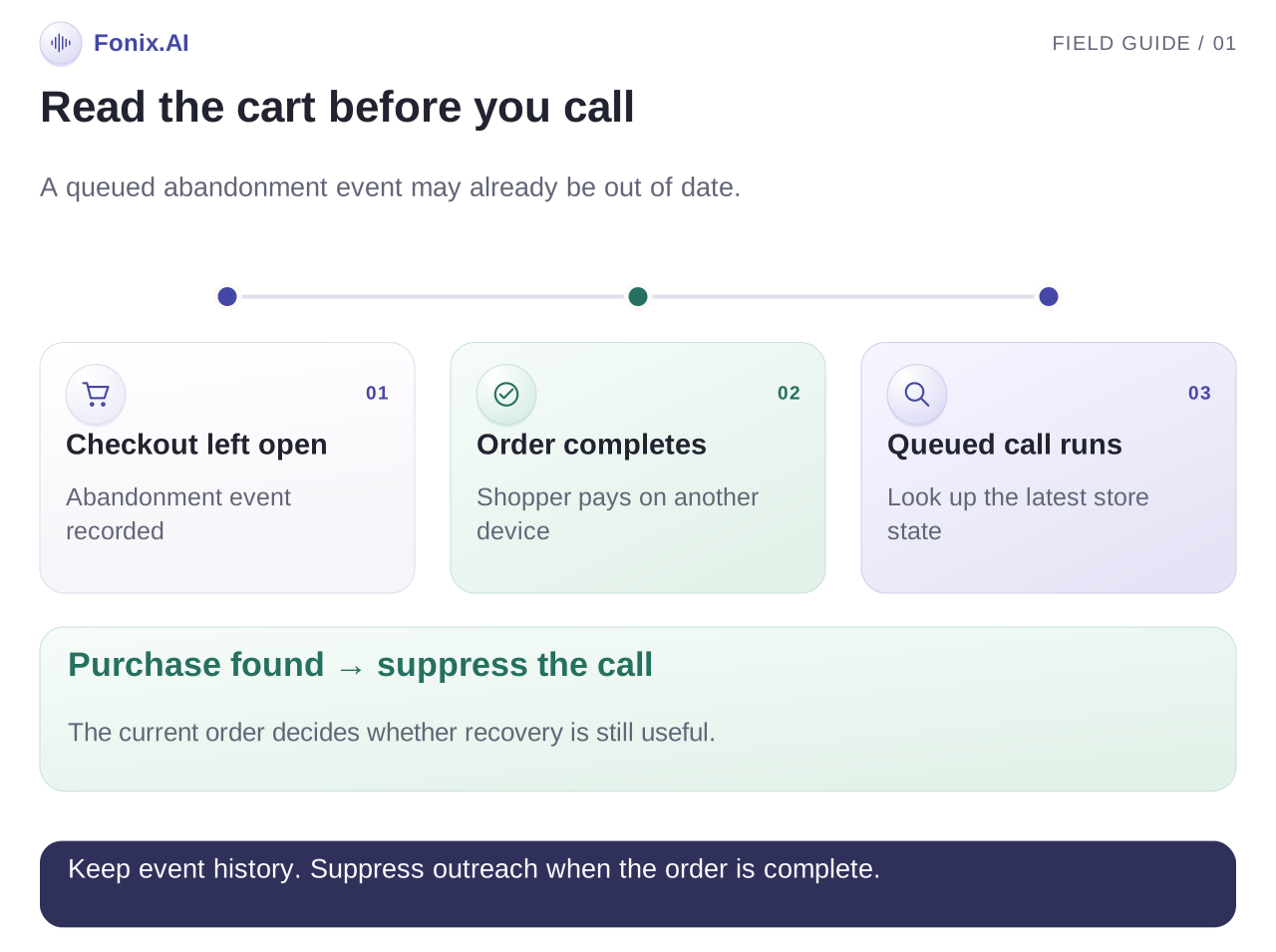
An abandoned-checkout event records what was true at a particular time. By the time a queued call runs, the shopper may have purchased on another device, changed the cart or contacted your support team.
Preserve the checkout reference, event time, store, contact preference and allowed outreach window. Read the latest checkout and related order state before calling. Suppress completed purchases, superseded checkouts and records that are no longer eligible under your policy.
Do not treat an identical telephone number as sufficient proof that two carts belong to the same person. Decide how your store resolves checkout identity and avoid revealing another shopper's items. Keep only the context needed for the assistance task.
If the store cannot provide a current result, hold the call or route the record for review. Repeating a stale discount or asking someone to buy an order they already paid for creates avoidable confusion.
Find the blocker before offering a remedy
Start with permission to discuss the unfinished checkout. Ask whether help would be useful. The shopper might be comparing products, checking delivery coverage, looking for a payment option or simply choosing not to buy.
| Shopper's question | Source needed | Appropriate next step |
|---|---|---|
| Is this size available? | Current variant inventory | Explain the available choice without reserving unheld stock |
| Does delivery reach my postcode? | Approved serviceability lookup | Confirm current coverage or route uncertainty |
| Can I pay on delivery? | Store's payment and cart rules | Explain the applicable option |
| Is the offer still valid? | Current offer conditions | Quote the approved terms, not a remembered campaign |
| Can I change the item? | Current catalogue and checkout capability | Help with an allowed change or send the request to support |
| I do not want to order | No sales inference required | End the recovery flow and honour the preference |
Avoid inventing scarcity, delivery dates or discounts to secure a commitment. When a question needs expertise or a store decision, hand it to the right person with the exact product and question attached.
Regional language tests should include sizes, colours, quantities, prices and corrections. “One blue, not two black” changes the order. Review the final checkout state against the conversation rather than scoring fluency alone.
Keep link delivery and order completion separate
A checkout link should point to the store's approved destination and current cart. Define who can create or retrieve it, how long it remains usable and what happens if the contents change. Never ask the caller to disclose payment credentials to complete a purchase.
If a message is configured, record whether it was requested, sent and delivered using the evidence your messaging system supplies. Do not announce delivery simply because a send request was accepted.
Recheck the order state before scheduling another follow-up. Once an order exists, move to its appropriate post-order workflow instead of continuing cart recovery. A retried event should not create another recovery sequence for the same checkout.
Agree on the attribution window before the pilot. A shopper who purchases several days later through another channel may be relevant to the cohort, but the call cannot automatically take credit for every subsequent order.
An illustrative recovery conversation
Assume a fictional store has confirmed that the checkout is still open and the requested payment option is currently available.
Assistant: Hello, this is the automated assistant for Willow Store. Would you like help with the checkout you started?
Shopper: Payment nahi hua. I was checking if COD is available for this address.
Assistant: I can check the approved delivery and payment options. Which postcode should I use for this checkout?
Shopper: The saved address is correct. Also one medium, not large.
Assistant: I have noted medium as your requested size. I will check its availability and the payment option before sending a checkout link.
The record should keep the payment question and size correction distinct. A link should not preserve the old size. If changing the cart requires staff action, record the request for review rather than say it was updated.
Suggested outcome fields include checkout reference, current cart version, eligibility result, blocker, approved answer source, change request, link status, follow-up preference and verified order reference. They are proposed workflow fields, not a Fonix API specification.
Handle changes and unanswered calls
| Exception | Decision |
|---|---|
| Purchase completes while the call is queued | Suppress outreach after a fresh order check |
| Product becomes unavailable during the call | Explain the current result and offer only approved alternatives |
| Two checkouts share contact details | Resolve identity using the store's rules before exposing items |
| Link creation times out | Check whether a link was created before retrying |
| Shopper requests later contact | Record a single requested time and recheck eligibility then |
| Shopper raises a refund or delivery complaint | Route to support; do not continue the cart pitch |
Apply your contact preference and attempt policy to unanswered calls. Use a bounded sequence with explicit stop conditions rather than repeated calls until someone answers.
Measure incremental orders with a holdout
Report eligible carts, contacts attempted, conversations, blockers resolved, links delivered and verified orders. Separate delivered, cancelled and returned orders when assessing revenue quality.
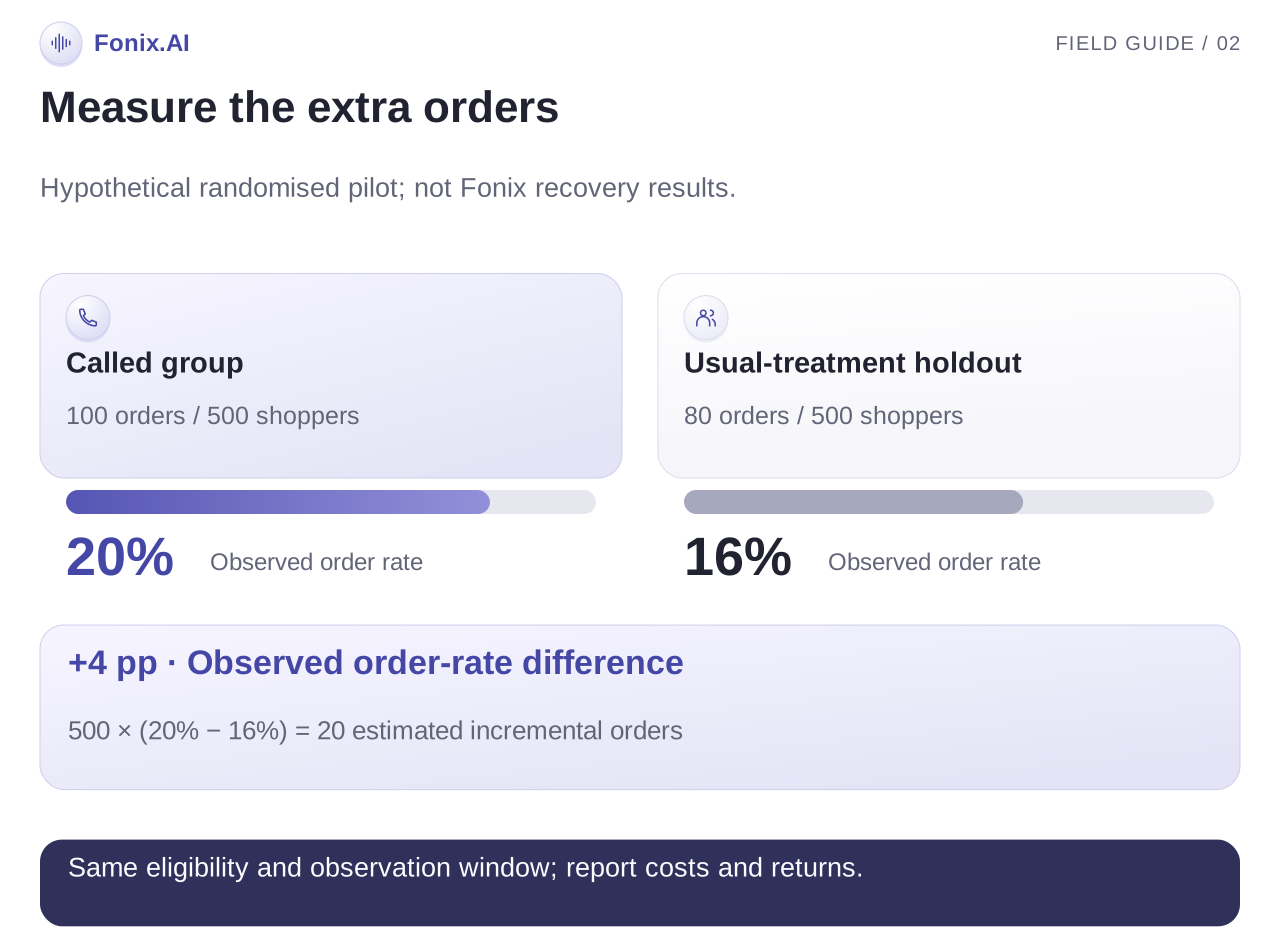
For a randomly assigned eligible cohort, compare the order rate among called shoppers with a holdout receiving the usual treatment. Use the same observation window and account for other campaigns. The difference estimates incremental orders under the pilot conditions; total orders after calls do not establish that the calls caused them.
Include calling, platform and follow-up costs in the evaluation. A recovered gross order value is not contribution margin. Review discounts, shipping, cancellations and returns using your own business data.
Review a small store-specific pilot
Bring a real abandoned-checkout event, catalogue and offer sources, purchase-suppression rules and an attribution baseline. Demonstrate an already-purchased cart, an unavailable size and a link request with an uncertain result.
The customer-support guide covers answers and escalation; the voice cost guide helps compare pilot economics. Request a cart recovery review to establish the required connections and outcome definitions for your store.