
A practical guide / Fonix.AI
AI lead qualification by voice: from enquiry to an accepted sales handoff
Workflows, exceptions and the questions to ask before deployment.
What makes a lead useful to sales?
An AI lead qualification voice agent should help a salesperson understand a business enquiry and decide the next conversation. A useful result includes the buyer's stated need, unresolved questions, the appropriate sales owner and an agreed next step. A connected call or an automatically assigned “hot” label does not establish that the opportunity is suitable.
This guide focuses on B2B product and service enquiries, such as a demo request. Property visits and student counselling have different requirements; use the dedicated real estate and admissions guides for those workflows.
Fonix.AI supports inbound and outbound business conversations in Indian languages. Evaluate the conversation alongside your enquiry and sales systems. Confirm the required CRM, calendar and routing connections for your deployment rather than assuming that a particular connector is available.
Start from the enquiry and its current owner
A form submission is an event, not a complete customer identity. Preserve its source, timestamp, enquiry reference, product interest and contact preferences. The same telephone number can appear on several enquiries, and a company can have several people evaluating the same purchase.
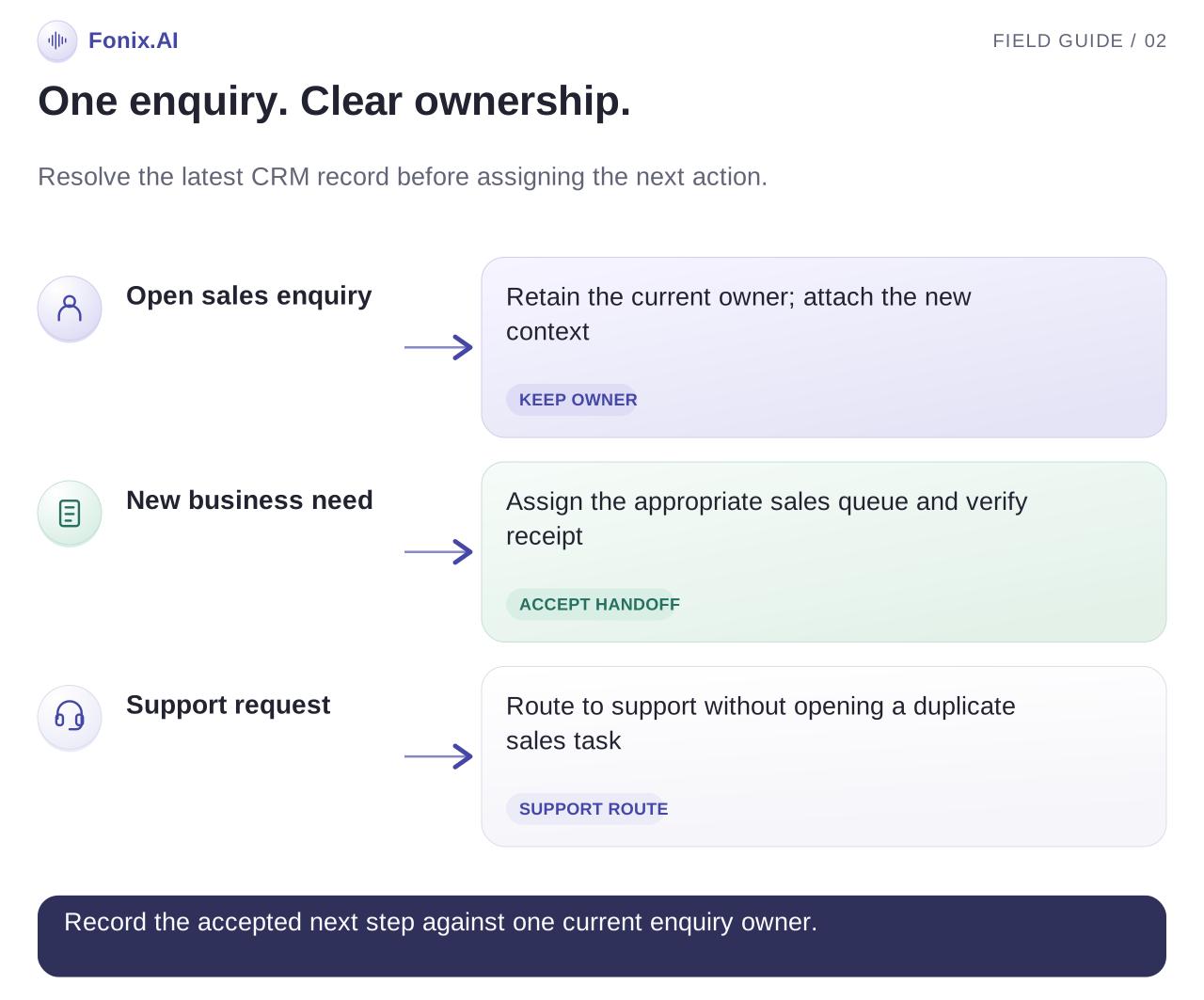
Resolve the enquiry against the current CRM before calling. If an account manager already owns the conversation, follow that ownership rule. A fresh demo form should not cause an independent automated follow-up to compete with an active salesperson.
Decide how you handle duplicate form events, people who request a later callback and records that no longer require contact. A durable enquiry reference and a single active outreach task make it easier to prevent several agents from calling the same person simultaneously.
Open with the business identity, explain that the caller is an automated assistant, refer to the actual enquiry and ask whether it is a suitable time. When the person does not recognise the request, capture that response instead of continuing a qualification script.
Capture requirements without manufacturing certainty
Ask questions because their answers change the next step. A short, relevant conversation is more useful than completing a framework at all costs.
| Question | Useful evidence | Keep separate |
|---|---|---|
| What problem are you trying to solve? | The buyer's own description and current process | Your interpretation of urgency |
| Which team would use the product? | Functions, approximate usage and workflow | An inferred company-wide rollout |
| What must the solution connect to? | Named systems and required actions | A promise of integration availability |
| When would you like to evaluate it? | A stated date or an undecided timeframe | A guessed buying deadline |
| Who should join the next conversation? | The requested participants | A judgement about decision-making authority |
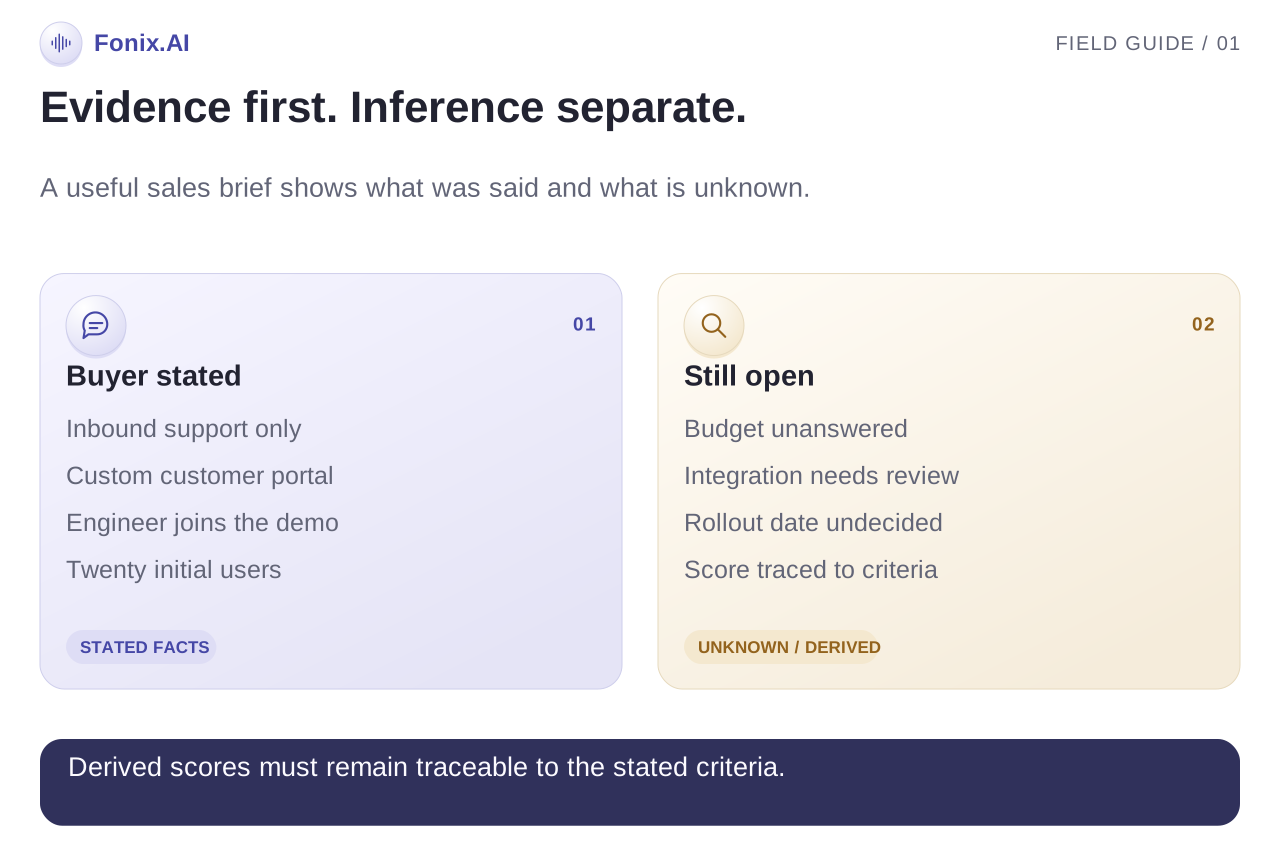
Budget can be useful when it determines whether a proposal is relevant, but an unanswered budget question should remain unanswered. “We need to understand the solution first” is not evidence of a low-quality buyer.
If you use a qualification score, document the criteria and expose the answers behind it. Keep the transcript, stated fields, derived score and human decision as separate records. A salesperson should be able to challenge a score without reconstructing the whole conversation.
Test corrections and mixed-language answers. “Twenty users now, maybe two hundred later” must not become a current requirement for two hundred seats. The multilingual evaluation guide explains how to review critical fields.
Route the next step and verify acceptance
Use the captured requirement and your approved territory, product and account rules to choose a destination. The appropriate result might be a demo, a technical discussion, a later callback or an answer to an initial question.
When booking a demo, check current availability, agree on an exact time and verify the scheduling write. When assigning a callback, record the receiving owner and requested time. Say that a callback was requested until your process establishes who accepted it.
Pass the buyer's original question, relevant answers, unknowns and contact preference. A summary saying “interested in product” creates work for the next salesperson; a brief explaining the current process and requested integration lets them start with a meaningful answer.
Keep the lead's qualification status distinct from its outreach status. “Not reached” does not mean “not suitable”, and a successful calendar write does not mean the prospect attended the demo.
A worked B2B enquiry
The following conversation is illustrative and describes a fictional business.
Assistant: Hello, this is the automated assistant for Acorn Software. You asked about a demo for your support team. Is now a suitable time?
Buyer: Haan, but we only need inbound support. Sales calling nahi chahiye.
Assistant: Understood: inbound support, without a sales-calling requirement. Which system holds your customer cases?
Buyer: Our own portal. API hai, but engineering needs to review access.
Assistant: I will include that in the technical discussion request. Would you like your engineer to join the demo?
The resulting brief should record inbound support as the scope, a custom portal as a dependency and engineering review as an open condition. It should not declare the integration ready or infer a confirmed rollout.
A suggested record contains the enquiry reference, account reference, stated problem, current system, requested participants, unanswered questions, next-step preference and sales owner. If a slot is booked, add its confirmed reference. These are workflow design fields, not a published Fonix API contract.
Test the cases that break the happy path
| Situation | Expected response | Evidence to retain |
|---|---|---|
| Duplicate form arrives during a call | Merge or suppress according to the enquiry policy | Both event references and active task |
| Buyer already spoke to an account manager | Respect current ownership | Existing owner and latest contact |
| Required integration is unconfirmed | Record the requirement for review | System name and exact action requested |
| Calendar write times out | Check its result before trying again | Attempt reference and desired slot |
| Buyer corrects company size or timing | Update the stated field and read it back | Correction and final accepted value |
| Buyer declines further contact | Close the flow through your contact-preference process | Preference and affected enquiry |
Include these cases in a demonstration. A fluent conversation can still produce a duplicate lead, an unsupported promise or an unowned callback. Review the written result as well as the audio.
Measure accepted handoffs and attended demos
Track eligible enquiries, attempted contacts, useful conversations, accepted sales handoffs, confirmed demos and attended demos for the same cohort. Define eligibility before the pilot so the denominator does not change when results look weak.
Review a sample of briefs for field accuracy, preserved uncertainty and correct ownership. Ask salespeople whether they could act on the record without asking the buyer to repeat the conversation. Compare accepted opportunities by enquiry source; a different campaign mix can change results independently of the calling workflow.
Measure response time from the original enquiry event and report its distribution. An average can hide a queue in which a few buyers wait a long time. Compare equivalent operating periods and keep a baseline or holdout where practical.
Bring one enquiry source to the demo
Bring a sample demo request, your qualification questions, account-ownership rules and the resulting CRM fields. Ask to see a duplicate enquiry, an undecided buyer and a booking that fails after agreement.
Use the calling-software guide for platform selection and the missed-call guide for unanswered inbound enquiries. Request a lead-to-demo workflow review to evaluate your language mix, integrations and sales handoff.